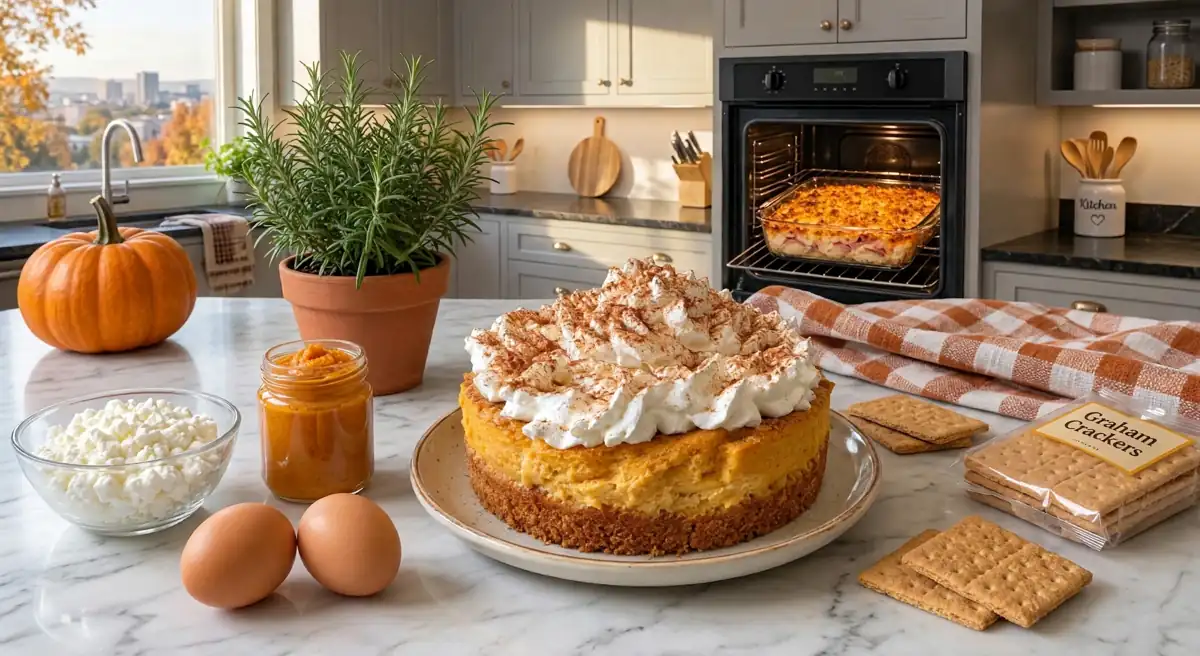
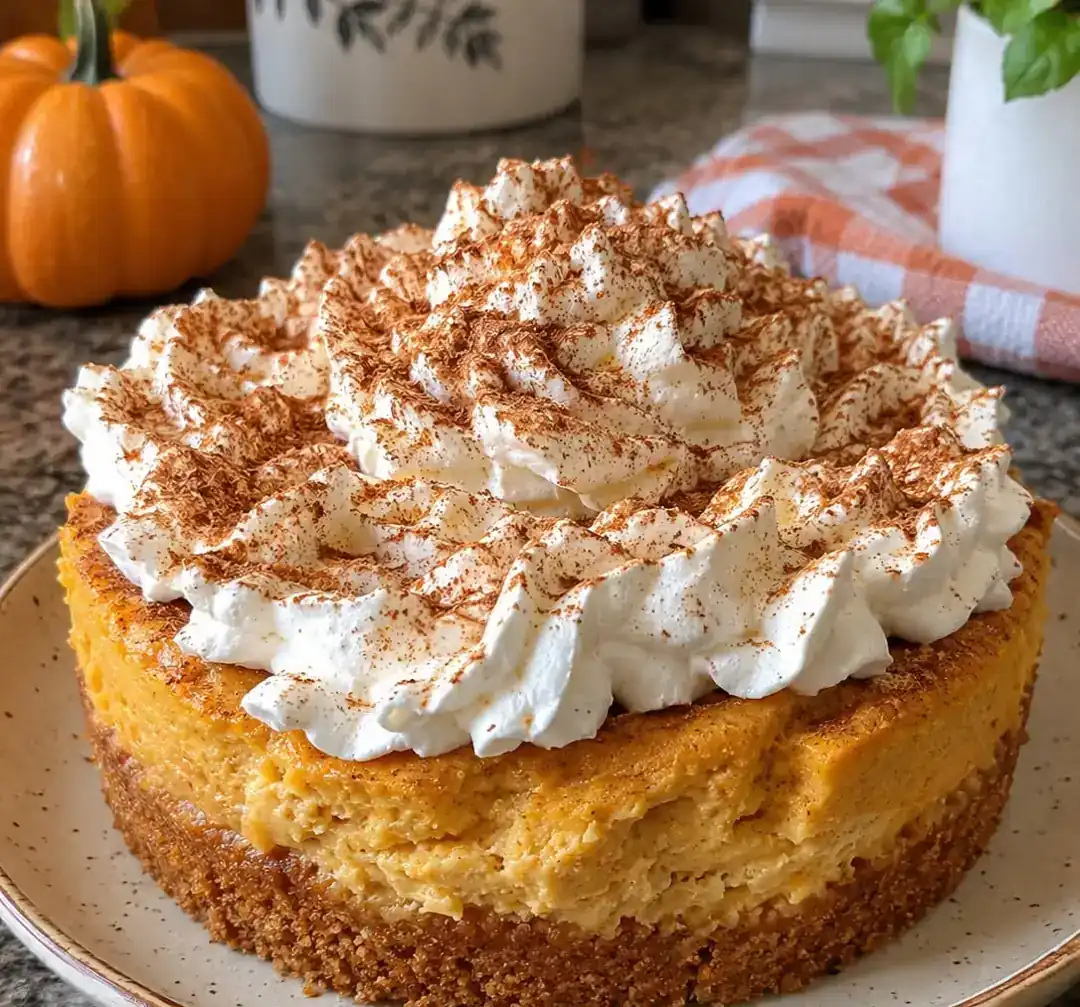
This lighter pumpkin cottage cheese cheesecake is the fall dessert that lets you have your cheesecake and actually feel good after eating it. It has everything you love about classic pumpkin cheesecake — the silky spiced filling, the buttery crumb crust, the cloud of whipped topping dusted with cinnamon — rebuilt on protein-rich blended cottage cheese, real pumpkin purée, warm anti-inflammatory spices, and an almond-walnut crust, with no cream cheese bricks, no refined sugar, and no heavy-cream crash afterward. Each slice lands around 200 calories with about 9 grams of protein, compared with the 400 to 500 calories in a typical bakery pumpkin cheesecake.
If you have seen cottage cheese cheesecake recipes all over your feed and wondered whether blended cottage cheese can honestly pass for cheesecake, this pumpkin version is the one that converts skeptics. Pumpkin purée and pumpkin spice are bold flavors — they carry the filling beautifully, the cottage cheese melts into a smooth, tangy, cream-cheese-like base once it is blended properly, and a spoonful of Greek yogurt adds the gentle tang you expect. The result is a high protein pumpkin cheesecake that slices cleanly, tastes like Thanksgiving, and fits a lighter, anti-inflammatory style of eating: whole-food ingredients, fiber-rich nuts instead of refined graham crumbs, natural sweetness from a modest amount of maple syrup (or a sugar-free swap), and a spice blend — cinnamon, ginger, and a pinch of golden turmeric — chosen as much for its anti-inflammatory reputation as for its flavor.
Whether you need a healthier Thanksgiving dessert, a make-ahead fall baking project, or a protein dessert you can enjoy on an ordinary Tuesday, this easy pumpkin cottage cheese cheesecake delivers. The blender does the hard work, the oven does the rest, and the fridge turns it into something sliceable and gorgeous. Let’s bake it.
Table of Contents
Why You Will Love This Recipe
- Truly lighter, honestly counted. About 200 calories and roughly 9 grams of protein per slice — close to half the calories of a classic pumpkin cheesecake — because cottage cheese and Greek yogurt replace the cream cheese and heavy cream.
- Silky, not curdy. Blending the cottage cheese for a full minute or more transforms it into a completely smooth base. Nobody at the table will guess the secret ingredient.
- Anti-inflammatory pantry heroes. Pumpkin brings beta-carotene and fiber; cinnamon, ginger, and turmeric bring the warm spice blend associated with anti-inflammatory eating; walnuts and almonds replace refined graham flour in the crust.
- No refined sugar required. A modest 1/3 cup of maple syrup sweetens the whole cake, and a granulated monk fruit swap makes it fully sugar-free without changing the method.
- Gluten-free by design. The almond-walnut crust means nobody at the holiday table needs a separate dessert.
- Make-ahead friendly. Cheesecake needs chilling time anyway, so this is the perfect bake-it-the-day-before dessert — the flavor is genuinely better on day two.
- Blender-easy. No stand mixer, no creaming, no fussy steps. Blend, pour, bake, chill.
What Makes This Cheesecake “Anti-Inflammatory” and Lighter
Traditional pumpkin cheesecake is built on ingredients that pile up fast: two or three bricks of cream cheese (about 342 calories and 34 grams of fat per 100 grams), a cup or more of refined sugar, heavy cream, and a crust of processed graham crumbs and butter. A single slice easily reaches 450 calories with over 30 grams of sugar.
This version rebuilds every layer with intent. Cottage cheese, at roughly 98 calories, 11 grams of protein, and about 4 grams of fat per 100 grams, gives you the creamy body of cream cheese with a fraction of the fat and more than double the protein — that is the entire engine of a cottage cheese cheesecake. Greek yogurt adds tang and more protein. Pumpkin purée contributes fiber, potassium, and beta-carotene, the antioxidant that gives the filling its sunset color. The spice blend does double duty: cinnamon and ginger are pantry staples in anti-inflammatory cooking, and a small pinch of turmeric deepens the golden color while adding the compound everyone talks about — a tiny pinch of black pepper alongside it is a classic pairing that helps curcumin absorption. The crust swaps refined graham flour for almond flour and walnuts, adding fiber, minerals, and satisfying healthy fats, and coconut oil replaces most of the butter. One honest note: “anti-inflammatory” here describes an ingredient pattern — whole foods, no refined sugar or flour, spice-forward — not a medical promise. It is simply a cheesecake built from ingredients that love you back a little more.
Ingredients
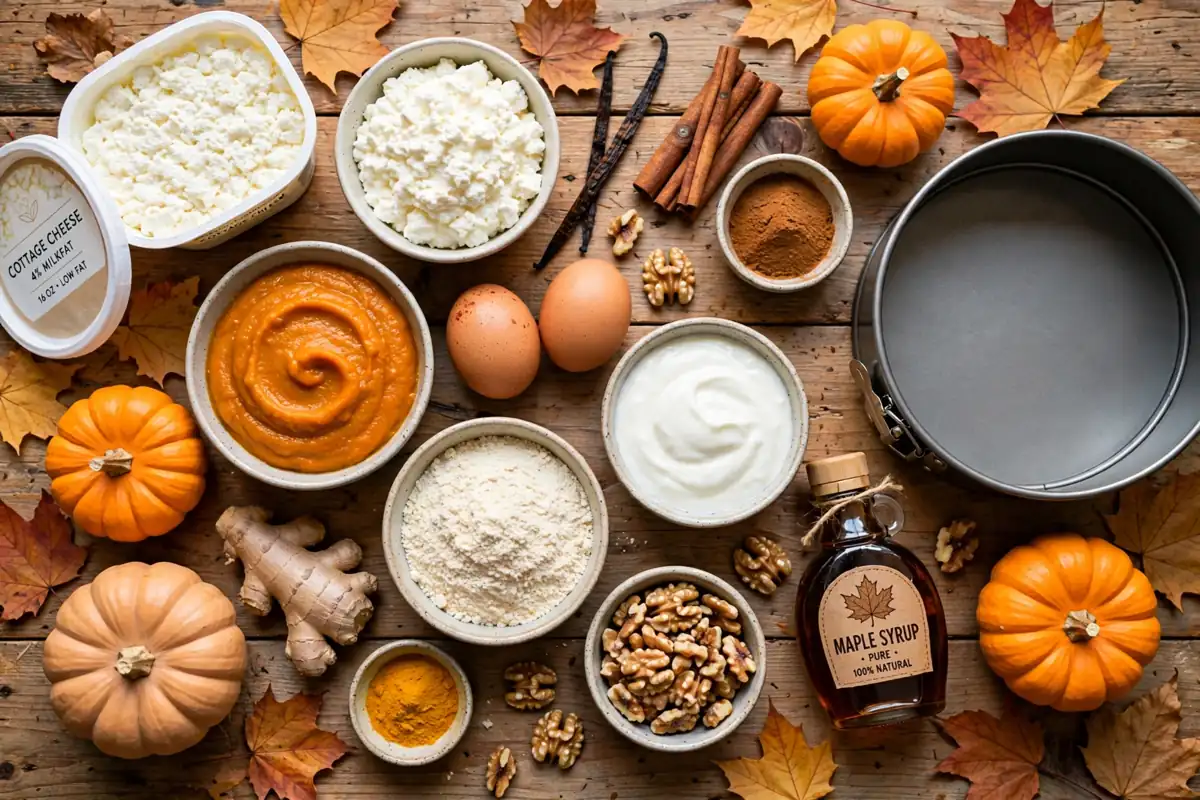
For the Almond-Walnut Crust
- 1 1/2 cups (150 g) fine almond flour
- 1/2 cup (50 g) walnuts, finely ground (or more almond flour)
- 2 tablespoons melted coconut oil (or melted butter)
- 1 tablespoon pure maple syrup
- 1 teaspoon ground cinnamon
- Pinch of fine sea salt
For the Pumpkin Cottage Cheese Filling
- 2 cups (450 g) low-fat cottage cheese (2% or 4% both work — see notes), blended until completely smooth
- 1 cup (245 g) pumpkin purée (pure pumpkin, NOT pumpkin pie filling)
- 1/2 cup (120 g) plain Greek yogurt (nonfat or 2%)
- 2 large eggs, at room temperature
- 1/3 cup (80 ml) pure maple syrup (or 1/2 cup granulated monk fruit sweetener for sugar-free)
- 2 tablespoons arrowroot powder or cornstarch
- 2 teaspoons pure vanilla extract
- 2 teaspoons pumpkin pie spice
- 1 teaspoon ground cinnamon
- 1/2 teaspoon ground ginger
- 1/4 teaspoon ground turmeric (optional, for golden color)
- Pinch of black pepper (optional, pairs with the turmeric)
- 1/4 teaspoon fine sea salt
For the Whipped Yogurt Topping
- 3/4 cup (180 g) plain Greek yogurt, cold
- 1/2 cup (120 ml) heavy cream or coconut cream, cold (whipped to soft peaks)
- 1 tablespoon maple syrup or powdered monk fruit, to taste
- 1/2 teaspoon vanilla extract
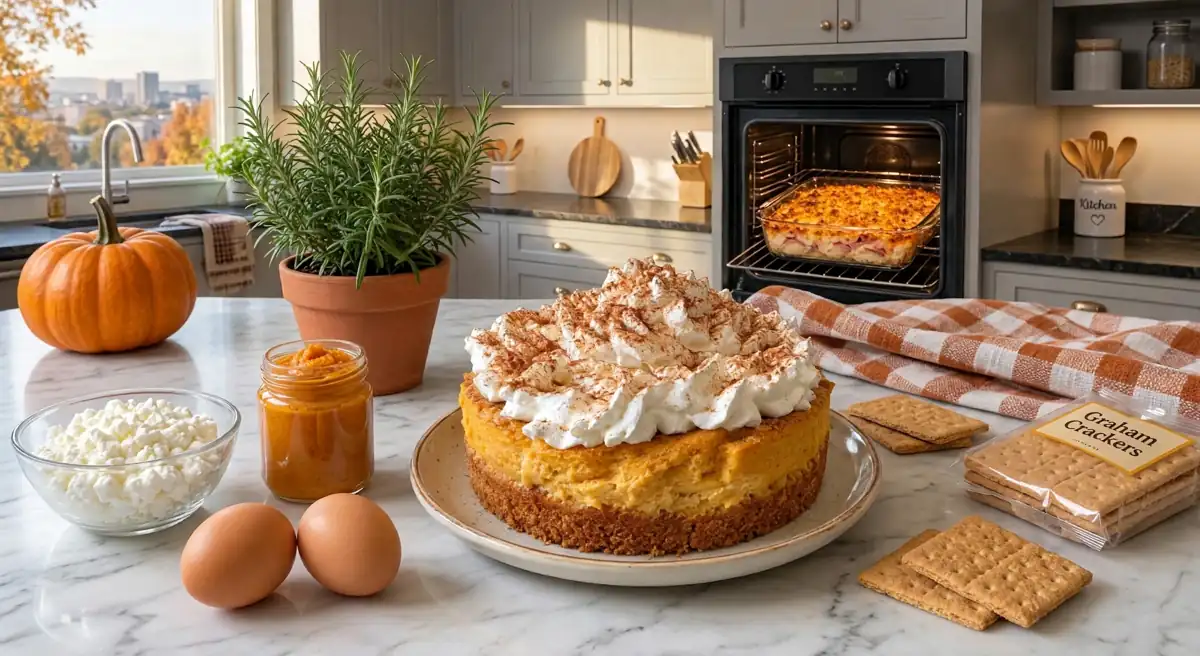
- Ground cinnamon and freshly grated nutmeg, for dusting (just like the photo)
Ingredient Notes and Substitutions
Cottage cheese. This is the heart of the recipe. Low-fat 2% cottage cheese keeps the cake lightest; 4% makes it a touch richer and is more forgiving. Either way, it must be blended until 100% smooth — no visible curds — which takes 60 to 90 seconds in a good blender, scraping once. Small-curd or large-curd both work once blended. Lactose-free cottage cheese works identically. Do not use fat-free cottage cheese if you can avoid it; it can bake up slightly rubbery.
Pumpkin purée. Use pure canned pumpkin purée. Pumpkin pie filling is pre-sweetened and pre-spiced and will throw off the whole recipe. Homemade roasted pumpkin purée works too — drain it in a fine sieve for 20 minutes, because homemade purée is wetter.
Greek yogurt. Adds classic cheesecake tang and protein. Plain dairy-free yogurt (coconut or almond based, unsweetened) works for a dairy-light version, though the protein drops.
Eggs. Two large eggs — exactly as the reference recipe promises — set the filling gently when paired with the arrowroot. Bring them to room temperature so the batter blends evenly and bakes without cracking.
Maple syrup. A modest amount sweetens without refined sugar. Honey works in the same quantity (the flavor reads slightly more floral). For a sugar-free cheesecake, use 1/2 cup granulated monk fruit–erythritol blend instead and skip the maple in the crust too — nutrition for that version is in the Nutrition section.
Arrowroot or cornstarch. Two tablespoons give the cottage cheese filling a clean, sliceable set. Tapioca starch also works 1:1.
Spices. Pumpkin pie spice plus extra cinnamon and ginger gives real depth. The turmeric is optional — you will not taste 1/4 teaspoon — but it intensifies the golden color and fits the anti-inflammatory theme of the recipe.
Crust swaps. No walnuts? Use all almond flour, or finely ground pecans (wonderful with pumpkin). Nut-free? A classic graham crust works — the cake will no longer be gluten-free or quite as anti-inflammatory in profile, but it will still be far lighter than a traditional cheesecake. Gingersnap crumbs make a spiced holiday crust.
Equipment You Will Need
- 8-inch (20 cm) springform pan (a 9-inch works; the cake will be slightly thinner and bakes about 5 minutes faster)
- Blender or food processor (essential — this is a blended cottage cheese recipe)
- Parchment paper, for lining the base
- Mixing bowls and a spatula
- Measuring cups and spoons or a kitchen scale
- Roasting pan, if using the optional water bath
- Wire rack and refrigerator space for chilling
How to Make Lighter Pumpkin Cottage Cheese Cheesecake
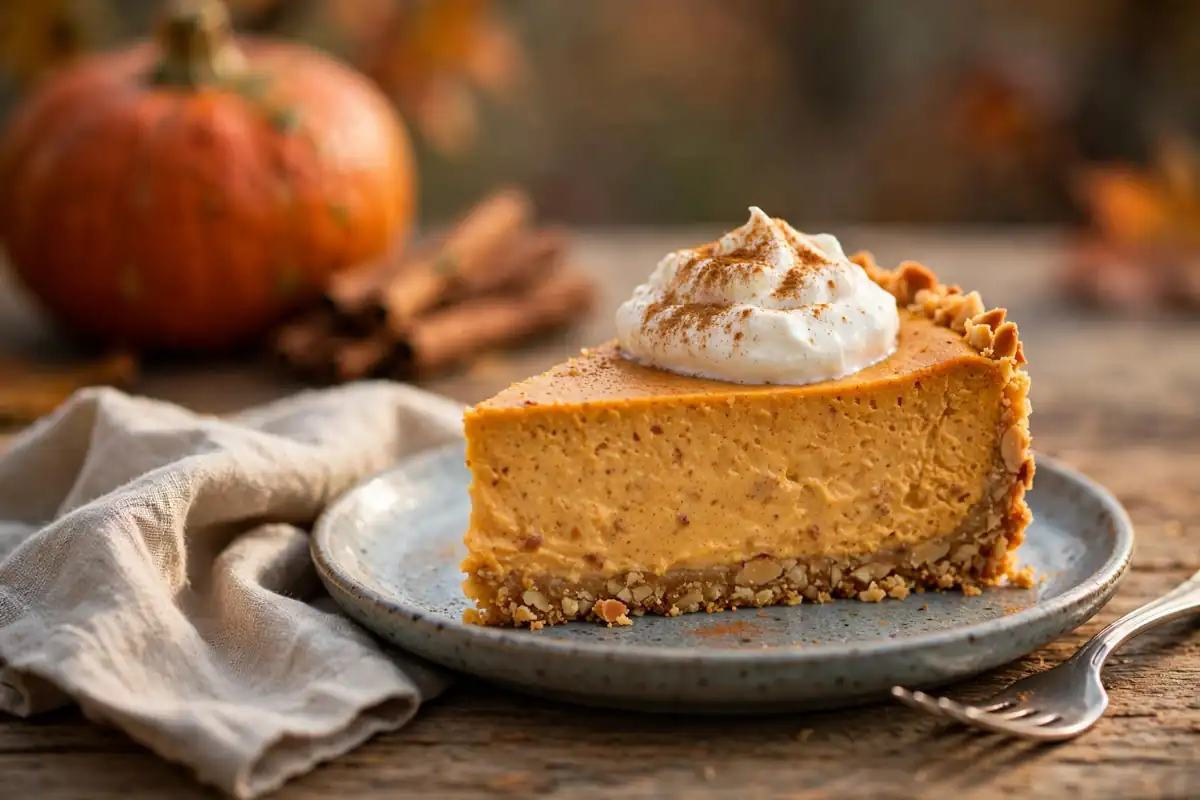
Step 1 — Heat the oven and prep the pan. Preheat the oven to 325°F (163°C). Line the base of an 8-inch springform pan with parchment and lightly grease the sides. If you plan to use a water bath (see Pro Tips), wrap the outside of the pan tightly in two layers of foil.
Step 2 — Mix the crust. Stir the almond flour, ground walnuts, cinnamon, and salt together. Add the melted coconut oil and maple syrup and mix until the texture resembles damp sand that clumps when squeezed.
Step 3 — Press and pre-bake. Tip the crumbs into the pan and press firmly and evenly across the base and about 1/2 inch up the sides — use the flat bottom of a measuring cup for a compact, even layer. Bake for 10 minutes, until fragrant and just set. Set aside to cool slightly while you blend the filling. Leave the oven on.
Step 4 — Blend the cottage cheese smooth. Add the cottage cheese to the blender and blend on high for 60 to 90 seconds, scraping down once, until it is completely silky with zero visible curds. This step is the whole secret of cottage cheese cheesecake — do not rush it.
Step 5 — Blend the filling. Add the pumpkin purée, Greek yogurt, eggs, maple syrup, arrowroot, vanilla, all the spices, and the salt to the blender. Blend on LOW for 15 to 20 seconds, just until uniform. Blending on low after the eggs go in keeps excess air out of the batter, which helps prevent cracks.
Step 6 — Fill the pan. Pour the filling over the warm crust and smooth the top. Tap the pan gently on the counter two or three times to release any large air bubbles.
Step 7 — Bake low and slow. Bake at 325°F (163°C) for 50 to 60 minutes. The cheesecake is done when the outer 2 inches look set and matte while the center still has a gentle jiggle — like set gelatin — when you nudge the pan. It will look slightly underdone in the middle; that is exactly right. Overbaking is what makes cottage cheese cheesecake dry and cracked.
Step 8 — Cool gradually. Turn the oven off, crack the door open, and let the cheesecake cool inside for 1 hour. This slow landing is the best crack insurance there is. Then move it to a rack to finish cooling to room temperature.
Step 9 — Chill until fully set. Cover and refrigerate for at least 4 hours, and ideally overnight. The filling firms into clean, creamy slices and the spice flavor blooms. Do not slice early — a warm cottage cheese cheesecake will fool you into thinking it failed when it simply had not set yet.
Step 10 — Top and serve. Whip the cold cream to soft peaks, fold in the Greek yogurt, maple, and vanilla, then spread or pipe it over the chilled cheesecake in generous swirls, exactly like the reference photo. Dust with cinnamon and a whisper of freshly grated nutmeg. Run a thin knife around the edge, release the springform ring, slice with a hot dry knife, and serve cold.
Pro Tips for a Silky, Crack-Free Cheesecake
- Blend longer than feels necessary. Ninety seconds of blending is the difference between “cottage cheese dessert” and “wait, this is cheesecake?” Any visible curd in the batter will still be visible in the slice.
- Room-temperature eggs and yogurt matter. Cold ingredients blend unevenly and can lengthen bake time, which dries the edges before the center sets.
- The water bath is optional but kind. Setting the foil-wrapped pan in a roasting pan with 1 inch of hot water gives the gentlest, most even bake and the smoothest top. With the slow oven-cool in Step 8 you can skip it and still avoid cracks, but for a holiday centerpiece, use the bath.
- Judge doneness by the jiggle, not the clock. Ovens vary by 25 degrees easily. The set edges with a wobbling center is the signal — a knife test will mislead you and can crack the surface.
- Never skip the chill. Cottage cheese cheesecake sets in the fridge, not the oven. Four hours minimum, overnight for the cleanest slices and the best flavor.
- Hot knife, clean cuts. Dip a long knife in hot water and wipe it dry between every slice for bakery-clean edges.
- Sweetness check before baking. Taste the batter (before the eggs go in, if you prefer) and adjust — pumpkin purées vary, and monk fruit blends vary in sweetness. The baked cake tastes slightly less sweet than the raw batter.
Variations to Try
- Sugar-Free Pumpkin Cheesecake. Swap the maple syrup for 1/2 cup granulated monk fruit sweetener in the filling and a powdered sugar-free sweetener in the topping. Each slice drops to roughly 170 calories and about 11 grams of total carbs.
- Chocolate Swirl. Melt 2 ounces of dark chocolate (70% or higher — another antioxidant-rich ingredient), drizzle it over the batter in the pan, and swirl once with a knife before baking.
- Gingersnap-Style Spice Crust. Add 1/2 teaspoon ground ginger and a pinch of cloves to the almond crust for a gingersnap effect without the cookie crumbs.
- No-Bake Version. Skip the eggs and arrowroot, bloom 2 teaspoons of gelatin in 3 tablespoons of warm milk (or coconut milk), blend it into the filling, pour over the pre-baked crust, and chill at least 6 hours. Softer set, same flavors — useful in summer.
- Mini Cheesecakes. Press crust into a lined 12-cup muffin tin, fill, and bake 22 to 25 minutes. Perfect portions at roughly 100 calories each, and they freeze beautifully.
- Protein-Boosted. Use 4% cottage cheese and full-fat Greek yogurt, or stir 1 scoop of unflavored or vanilla protein powder into the blender (add 2 extra tablespoons of yogurt to balance the dryness). Slices climb toward 12 grams of protein.
- Classic Graham Crust (the photo’s crust). The reference photo shows a traditional golden crumb crust, and it is lovely — swap the almond crust for 1 1/2 cups graham crumbs plus 5 tablespoons melted butter, pressed and pre-baked the same way. Just know the cake is then no longer gluten-free, and add about 25 calories per slice.
Serving Suggestions
Serve slices cold, straight from the fridge, with the whipped yogurt topping and extra cinnamon on top. A small drizzle of warm maple syrup or a spoonful of sugar-free caramel makes it feel like a bakery dessert. For a Thanksgiving spread, this cheesecake holds its own next to pumpkin pie — and it is the one that disappears first among guests who “just want a small slice.” Coffee, chai, or a golden turmeric latte all pair beautifully with the spice profile. For a plated dinner-party look, serve each slice with a few toasted walnut halves and a tiny pinch of flaky salt over the topping — salt wakes up pumpkin spice like nothing else.
Storage, Freezing, and Make-Ahead
- Refrigerator: Store covered in the fridge for up to 5 days. The flavor deepens through day 3, so making it ahead genuinely improves it.
- Freezer: Freeze the whole cheesecake (without topping) or individual slices, well wrapped, for up to 2 months. Thaw overnight in the fridge and add fresh topping before serving.
- Make-ahead timeline: Bake on day 1, chill overnight, top and serve on day 2. This is the ideal rhythm for Thanksgiving — oven free on the day, dessert already done.
Nutrition Information
Per slice (1 of 8), maple syrup version, including crust and topping — calculated from the full ingredient list: approximately 205 calories, 9 g protein, 19 g total carbohydrates, 3 g fiber, about 16 g net carbs, 11 g fat, and 11 g sugar (mostly from the pumpkin and the 1/3 cup of maple spread across eight slices). For comparison, a classic cream-cheese pumpkin cheesecake slice typically runs 400 to 500 calories with 30-plus grams of sugar. Made with the monk fruit swap, each slice is roughly 170 calories with about 11 g total carbs. These figures are honest estimates from standard ingredient data — your exact brands of cottage cheese and yogurt will move them slightly. This is a lighter, protein-supporting dessert built on whole ingredients; it is not a medical food, and the anti-inflammatory framing refers to the ingredient pattern (spices, nuts, pumpkin, no refined sugar or flour), which fits anti-inflammatory eating guidelines as commonly described.
Frequently Asked Questions
Can you really taste the cottage cheese in cottage cheese cheesecake? No — not when it is blended properly. Blending for 60 to 90 seconds removes every curd, and pumpkin plus warm spices are bold flavors that completely carry the filling. Tasters reliably guess “cream cheese, maybe a lighter one.” The Greek yogurt adds the familiar tang.
Why did my cheesecake crack, and how do I prevent it? Cracks come from overbaking, sudden temperature change, or too much air in the batter. Blend on low once the eggs are in, pull the cake while the center still jiggles, and cool it slowly in the turned-off oven with the door cracked. A water bath adds extra insurance. And if a crack happens anyway, the whipped topping covers it completely — that is what it is for.
Can I use fat-free cottage cheese or fat-free Greek yogurt? You can, and the cake will still set, but the texture is noticeably less creamy and can turn slightly spongy. Low-fat (2%) products are the sweet spot for a lighter pumpkin cheesecake that still tastes like dessert.
Is pumpkin pie filling the same as pumpkin purée? No, and this swap ruins the recipe. Pumpkin pie filling is pre-sweetened and pre-spiced — using it would make the cake far too sweet and unbalanced. The can you want says “100% pure pumpkin.”
How far ahead can I make this cheesecake? It is at its best made 1 to 2 days ahead: the chill sets it firmly and the spices bloom. Five days in the fridge is the storage limit, and it freezes well for 2 months without the topping.
Can I make this cheesecake without a springform pan? Yes — a deep 9-inch pie dish works. Press the crust in, bake the same way (check 5 minutes early), and serve slices straight from the dish rather than unmolding. A regular cake pan lined with a parchment sling also works in a pinch.
Final Thoughts
This anti-inflammatory lighter pumpkin cottage cheese cheesecake proves that “lighter” does not have to mean “lesser.” Blended cottage cheese gives you a genuinely creamy, protein-rich filling; pumpkin and warm spices — cinnamon, ginger, and that pinch of golden turmeric — give you all the fall flavor of the classic; and an almond-walnut crust keeps it gluten-free and satisfying. At about 200 calories a slice, it is a Thanksgiving dessert you can serve proudly and eat happily — maybe even twice. Bake it a day ahead, pile on the whipped yogurt topping, dust it with cinnamon, and watch the skeptics ask for the recipe. If you try it, leave a rating and a comment — and tell me honestly: did anyone at your table guess the cottage cheese?
Recipe Card: Lighter Pumpkin Cottage Cheese Cheesecake
Prep Time: 20 minutes Cook Time: 50–60 minutes, plus 1 hour cooling in the oven Chill Time: 4 hours minimum (overnight best) Total Time: About 6 hours, mostly hands-off Yield: 8 slices Category: Dessert Method: Baked, blended Cuisine: American
Ingredients
Crust: 1 1/2 cups (150 g) almond flour · 1/2 cup (50 g) finely ground walnuts · 2 tbsp melted coconut oil · 1 tbsp maple syrup · 1 tsp cinnamon · pinch of salt
Filling: 2 cups (450 g) low-fat cottage cheese, blended smooth · 1 cup (245 g) pumpkin purée · 1/2 cup (120 g) plain Greek yogurt · 2 large eggs · 1/3 cup (80 ml) maple syrup (or 1/2 cup monk fruit sweetener) · 2 tbsp arrowroot or cornstarch · 2 tsp vanilla · 2 tsp pumpkin pie spice · 1 tsp cinnamon · 1/2 tsp ground ginger · 1/4 tsp turmeric (optional) · pinch of black pepper (optional) · 1/4 tsp salt
Topping: 3/4 cup Greek yogurt · 1/2 cup cream or coconut cream, whipped · 1 tbsp maple syrup · 1/2 tsp vanilla · cinnamon and nutmeg for dusting
Instructions
- Heat oven to 325°F (163°C). Line an 8-inch springform pan with parchment; grease the sides.
- Mix crust ingredients, press firmly into the pan base and slightly up the sides; bake 10 minutes.
- Blend the cottage cheese 60–90 seconds until completely smooth.
- Add all remaining filling ingredients; blend on low 15–20 seconds until just combined.
- Pour over the crust; tap out air bubbles.
- Bake 50–60 minutes, until the edges are set and the center still jiggles gently.
- Cool 1 hour in the turned-off oven with the door cracked, then to room temperature.
- Chill at least 4 hours or overnight.
- Whip the topping ingredients together, spread or pipe over the chilled cheesecake, dust with cinnamon and nutmeg, slice, and serve cold.
Notes
- Blend the cottage cheese fully smooth — it is the difference between grainy and silky.
- Pure pumpkin purée only; pumpkin pie filling is pre-sweetened and will unbalance the recipe.
- Sugar-free version: monk fruit swap brings each slice to roughly 170 calories and about 11 g total carbs.
Nutrition (per slice, maple version, estimated)
Calories: 205 · Protein: 9 g · Total Carbs: 19 g · Fiber: 3 g · Net Carbs: ~16 g · Fat: 11 g · Sugar: 11 g