
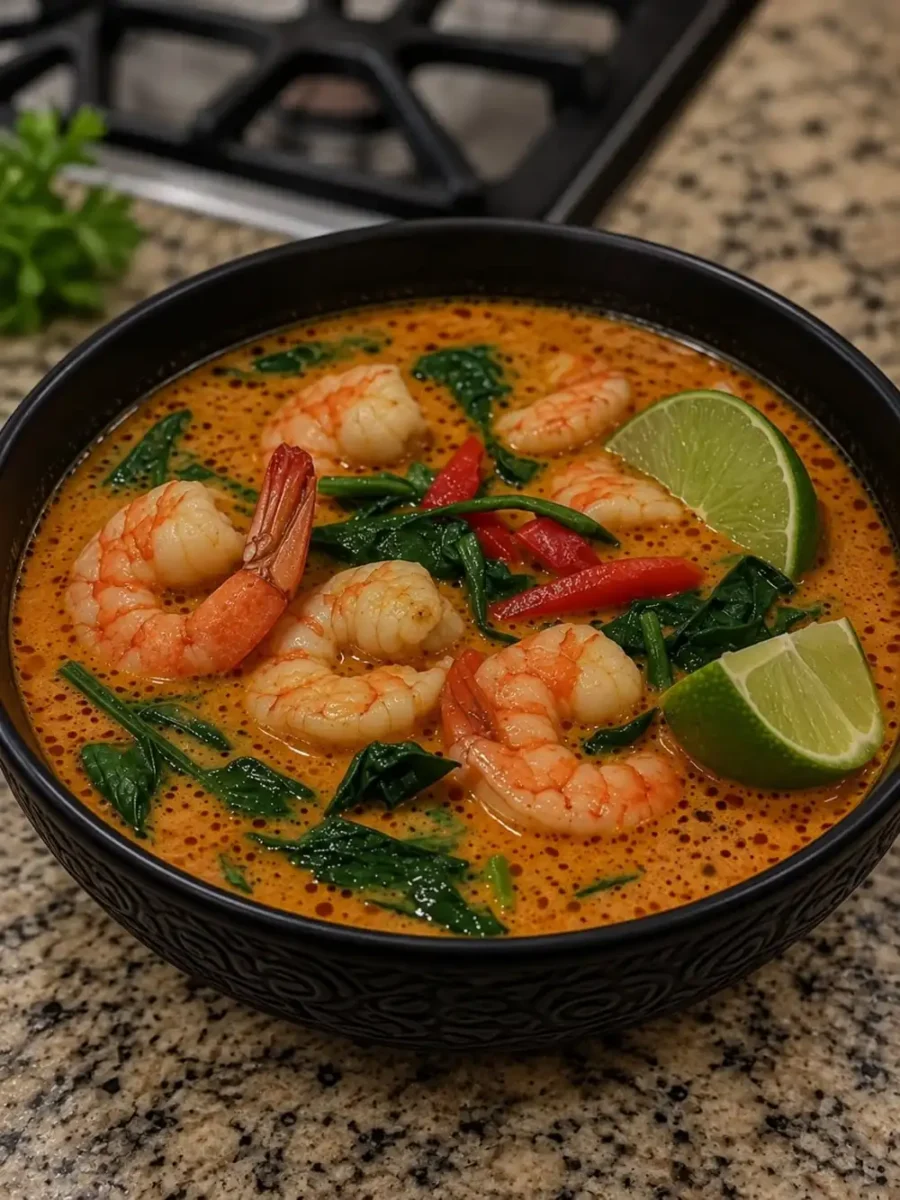
This is the soup I make when I want takeout flavor without the takeout wait: a silky, orange-red coconut curry broth, plump shrimp that cook in three minutes, ribbons of red pepper, a handful of spinach wilted in at the end, and lime wedges squeezed over right before eating — exactly the bowl in the photo. It’s Thai-inspired (cousin to tom kha), built on red curry paste and full-fat coconut milk, and the whole pot takes about 25 minutes from chopping board to bowl.
The reason this soup tastes like a restaurant made it comes down to two small techniques, and neither is hard. First, you fry the curry paste in oil for a full minute before any liquid goes in — that’s what turns it from raw and sharp to deep and fragrant. Second, the shrimp go in last and come off the heat the moment they curl into a C shape, so they stay snappy instead of rubbery. Get those two right and this is genuinely hard to mess up.
Quick answer: Coconut curry shrimp soup is a Thai-inspired soup made by frying red curry paste with garlic and ginger, simmering it in coconut milk and stock with red bell pepper, then finishing with shrimp (3 minutes, just until pink), fresh spinach, fish sauce, and lime juice. It serves 4, takes about 25 minutes, and comes to roughly 300 calories and 24 g protein per bowl.
Table of Contents
Why You’ll Love This Soup
- 25 minutes, one pot. The broth builds while the shrimp wait their turn — no separate pans, no marinating, no fuss.
- That broth, though. Creamy coconut milk, warm curry heat, salty fish sauce, a pinch of sugar, and lime at the end — the full sweet-salty-sour-spicy balance Thai cooking is famous for.
- High protein, genuinely filling. A pound of shrimp across four bowls means about 24 g protein per serving, so this is dinner, not a starter pretending.
- Heat is yours to set. Red curry pastes vary wildly; start with 2 tablespoons for gentle warmth, go to 4 if your household likes to sweat a little.
- Tastes better on day two. The flavors marry overnight, which makes it a rare soup that’s meal-prep friendly (with one shrimp rule, below).
Ingredients
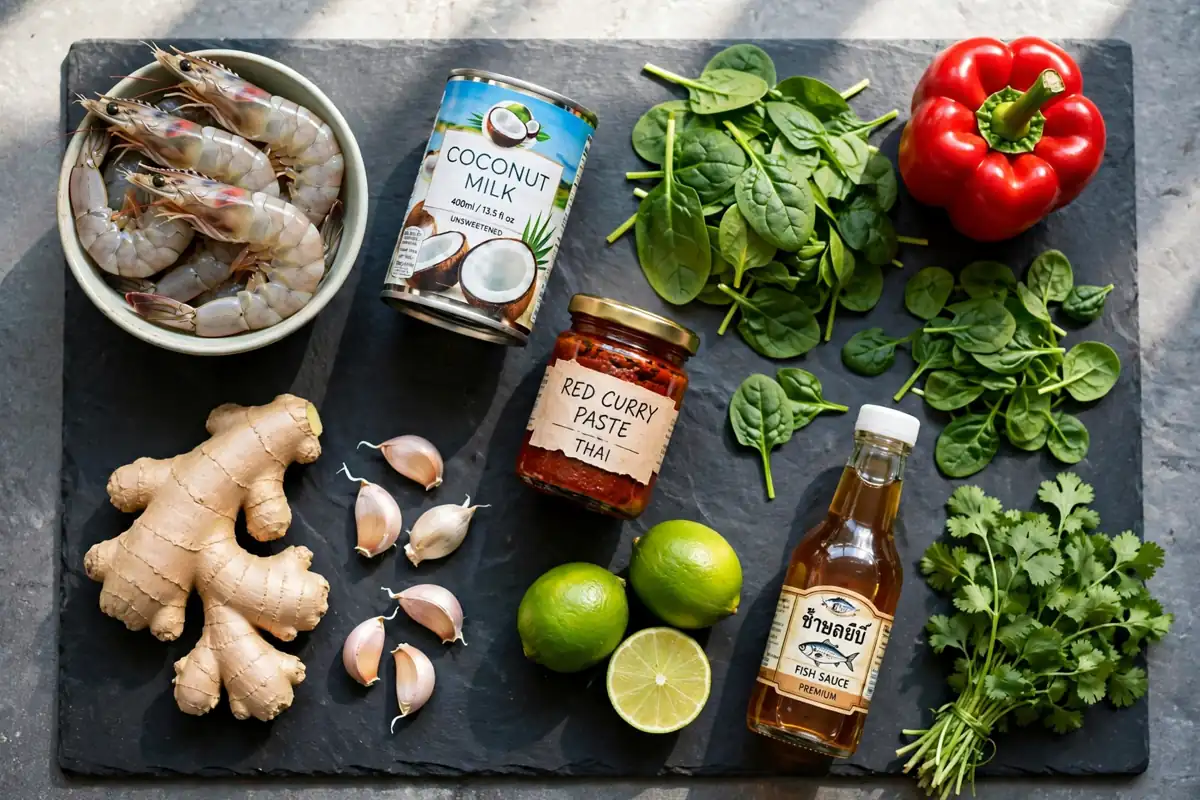
- 1 lb (450 g) large shrimp, peeled and deveined (tails left on looks like the photo; tails off is easier eating — your call)
- 1 tablespoon coconut oil (or any neutral oil)
- 1/2 medium onion or 2 shallots, finely diced
- 3 garlic cloves, minced
- 1 tablespoon grated fresh ginger
- 3 tablespoons Thai red curry paste (2 for mild, 4 for hot)
- 1 can (14 oz / 400 ml) full-fat coconut milk — canned, not the carton kind
- 2 cups (480 ml) chicken or seafood stock (vegetable stock works too)
- 1 red bell pepper, cut into thin strips
- 1 tablespoon fish sauce, plus more to taste
- 1 teaspoon brown sugar or coconut sugar
- 3 cups (90 g) baby spinach, loosely packed
- Juice of 1 lime (about 2 tablespoons), plus lime wedges to serve
- Fresh cilantro, to serve
- Salt, only if needed — fish sauce may cover it
Notes from my kitchen. Full-fat canned coconut milk is non-negotiable for the silky broth in the photo; the refrigerated carton kind is mostly water and flavoring and will give you a thin, sad soup. Shake the can hard before opening, and don’t panic when it looks separated — it melts together in the pot. On curry paste: Mae Ploy and Maesri run hotter and saltier than Thai Kitchen; if you’re using one of those, start at 2 tablespoons and taste before adding more. Frozen shrimp are completely fine here (most “fresh” shrimp were frozen anyway) — thaw under cold running water for 10 minutes and pat very dry.
Easy swaps. No fish sauce? Use 1 tablespoon soy sauce plus a pinch of salt — different, but good. Bok choy or kale (stems removed, add 2 minutes earlier) swap for the spinach. Chicken breast strips or firm tofu make it a chicken/tofu soup with the same broth. Light coconut milk works at the cost of richness; add a teaspoon of cornstarch slurry if you want the body back.
Equipment
- Large pot or Dutch oven
- Wooden spoon
- Knife and cutting board
- Ladle and bowls
- Citrus juicer or just your hands
How to Make Coconut Curry Shrimp Soup
Step 1 — Soften the onion. Heat the coconut oil in a large pot over medium heat. Add the onion and cook 3–4 minutes, stirring now and then, until soft and translucent at the edges.
Step 2 — Bloom the curry paste. Add the garlic, ginger, and red curry paste. Stir constantly for 1 full minute. The paste will darken slightly, the oil will turn orange, and the smell will go from raw to wow. This minute is the whole recipe’s foundation — don’t shorten it.
Step 3 — Build the broth. Pour in the coconut milk and stock, scraping the bottom of the pot as you stir. Add the fish sauce and sugar. Bring to a gentle simmer — never a hard boil, which can split coconut milk and make the surface oily.
Step 4 — Cook the peppers. Add the red pepper strips and simmer 3–4 minutes, until just tender but still holding their shape and color.
Step 5 — The shrimp, last and fast. Add the shrimp in a single layer and simmer gently for 2–3 minutes, turning once, until they’re pink, opaque, and curled into a loose C. The second they hit that shape, take the pot off the heat — residual heat finishes them, and one extra minute is the difference between snappy and rubbery.
Step 6 — Wilt and finish. Stir in the spinach a handful at a time until just wilted, about 1 minute. Off the heat, stir in the lime juice. Taste: it should be creamy, warm, salty, and bright. Adjust with more fish sauce (salt), lime (sour), sugar (balance), or a pinch of chili flakes (fire).
Step 7 — Serve. Ladle into bowls, scatter cilantro, and put lime wedges on the side so everyone can add their own final squeeze — the photo’s two wedges aren’t decoration, they’re the last seasoning.
Pro Tips for Restaurant-Level Flavor
- Paste first, liquid second, always. Curry paste fried in fat for a minute tastes twice as deep as paste stirred into broth. It’s the single most repeated tip in Thai home cooking for a reason.
- Keep it at a bare simmer. Boiling coconut milk hard makes it split and turn greasy on top. Gentle bubbles at the edge of the pot — that’s the ceiling.
- Lime juice goes in off the heat. Boiled lime juice turns dull and slightly bitter; stirred in at the end, it stays bright. Same reason the wedges at serving matter.
- Dry shrimp cook better. Wet shrimp dilute the broth and steam instead of warming through in it. Ten seconds with paper towels is worth it.
Variations to Try
- Noodle soup version: Add 4 oz rice noodles (soaked per package directions) with the peppers — it becomes a full one-bowl meal, closer to the Thai noodle soups.
- Mushroom edition: Add 8 oz sliced mushrooms with the peppers; they drink up the curry broth and make the soup earthier and more substantial.
- Tom kha style: Swap the red pepper for tomatoes, add a stalk of lemongrass (bruised) and a few lime leaves with the broth, and finish with extra lime — closer to classic tom kha goong.
- Extra-veggie clean-out: Zucchini half-moons, green beans, or frozen peas all work; add firmer veg with the peppers, delicate veg with the spinach.
- Milder, kid-friendly pot: Use 1 tablespoon of paste and light coconut milk; serve chili oil at the table for the adults.
What to Serve With It
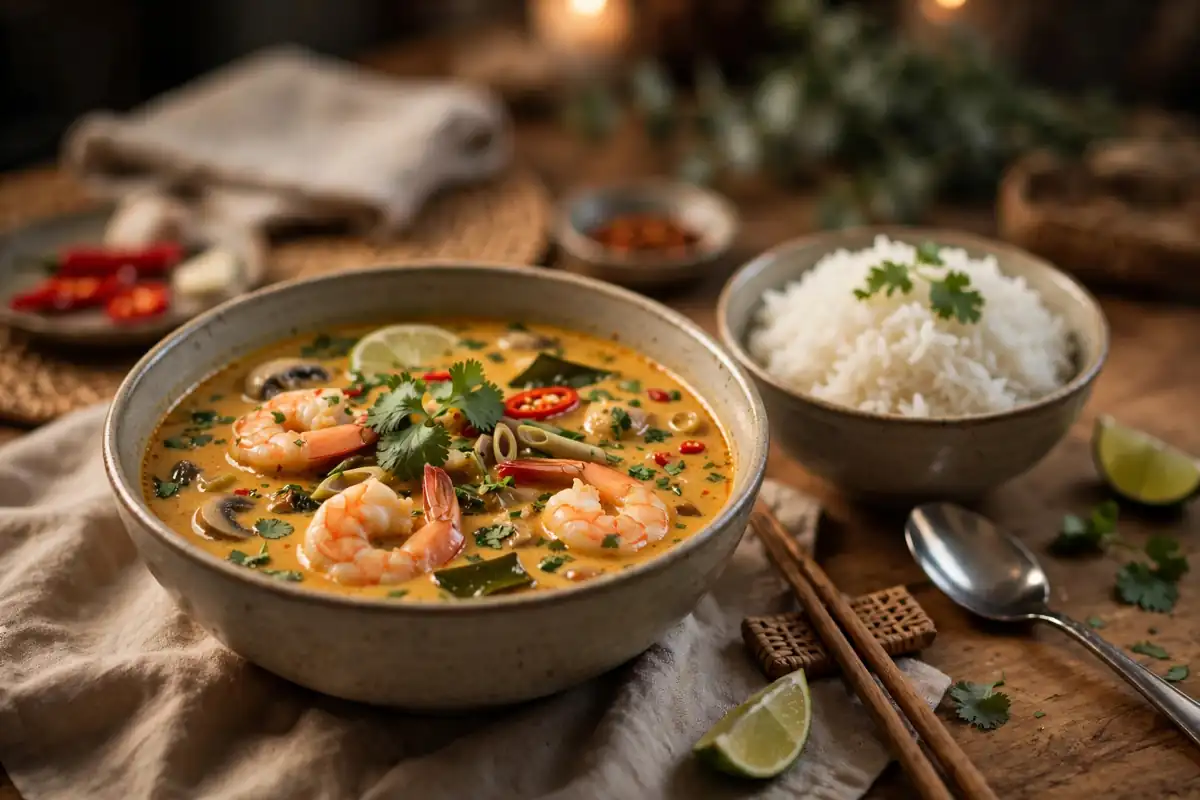
Jasmine rice is the classic partner — spoon it into the bowl first and ladle the soup over, or serve it alongside for broth-sopping. Rice noodles turn it into a main-course noodle soup (see Variations). For a lighter table, it’s a complete bowl on its own with just the lime and cilantro, maybe with a cucumber salad on the side for crunch and cool. If you’re serving it as a starter, halve the bowls and follow with the mushroom and broccoli stir-fry or any simply grilled main — the curry flavor is big enough to open a meal, not fight it.
Storage and Reheating
Refrigerate leftovers in a sealed container for up to 2 days — seafood soups keep a shorter clock than most. The important rule: reheat gently and don’t boil, and know that the shrimp will firm up a little on reheating no matter what you do. If you’re cooking for meal prep on purpose, make the broth with the peppers and spinach, refrigerate it for up to 3 days, and cook fresh shrimp in it as you reheat each portion — 3 minutes and it tastes just-made. Freezing works for the broth alone (up to 2 months, without shrimp or spinach); thaw, simmer, add both fresh.
Nutrition
Per serving (1 of 4 bowls), figured from the ingredient list: approximately 300 calories, 24 g protein, 9 g total carbs, 2 g fiber, about 7 g net carbs, 18 g fat, and 4 g sugar. The fat is mostly the coconut milk — that’s the trade for the silky broth, and using light coconut milk drops it to roughly 230 calories with a thinner texture. With about 7 g net carbs per bowl, it fits a relaxed low-carb or keto-leaning day as written; skip the teaspoon of sugar and it’s tighter still. Sodium depends heavily on your stock and fish sauce brand — low-sodium stock gives you control.
Frequently Asked Questions
How do I know when the shrimp are done? Two signs: color and shape. Raw shrimp are grey and straight; done shrimp are pink, opaque, and curled into a loose C. If they curl into a tight O, they’ve gone too far — pull the pot off earlier next time. For large shrimp in simmering broth, 2–3 minutes is the window.
Can I use frozen shrimp? Yes — thaw them first under cold running water (about 10 minutes), drain well, and pat dry. Cooking from frozen releases water into the broth and overcooks the outside before the middle warms through.
Why did my coconut milk split or look oily? It boiled too hard, or the soup sat at a rolling boil after the milk went in. Keep everything at a gentle simmer, and stir the coconut milk in gradually. A split soup still tastes fine — a quick whisk off the heat brings it mostly back together.
How spicy is this, and how do I control it? As written with 3 tablespoons of a supermarket paste, it’s a medium warmth that builds slowly. Curry pastes vary a lot by brand, so the real answer is: start with 2 tablespoons, taste the broth before the shrimp go in, and add more paste (fry it in a spoonful of the hot broth first) if you want more fire.
Can I make it without fish sauce? Yes. Soy sauce or tamari (1 tablespoon) plus a pinch of salt gives you the savory depth; the flavor shifts slightly less “Thai,” but the soup is still balanced and delicious. Coconut aminos work too and keep it soy-free.
Final Thoughts
Some soups are projects. This one is a weeknight gift: a pot of fragrant, creamy, lime-bright curry broth with perfect shrimp, on the table in about 25 minutes, tasting like you knew exactly what you were doing (you did — you fried the paste and didn’t boil the lime). Make it once as written, then start playing with the variations. If your household is anything like mine, it enters the cold-weather rotation and never leaves.
Recipe Card: Coconut Curry Shrimp Soup
Prep Time: 10 minutes · Cook Time: 15 minutes · Total Time: About 25 minutes Yield: 4 servings · Category: Soup / Dinner · Method: Stovetop · Cuisine: Thai-inspired
Ingredients
1 tbsp coconut oil · 1/2 onion, diced · 3 garlic cloves, minced · 1 tbsp grated ginger · 3 tbsp red curry paste · 1 can (14 oz) full-fat coconut milk · 2 cups stock · 1 red bell pepper, sliced · 1 tbsp fish sauce · 1 tsp brown sugar · 1 lb large shrimp, peeled & deveined · 3 cups baby spinach · Juice of 1 lime + wedges · Cilantro
Instructions
- Soften the onion in coconut oil, 3–4 minutes.
- Add garlic, ginger, and curry paste; stir-fry 1 minute until fragrant.
- Add coconut milk, stock, fish sauce, and sugar; bring to a gentle simmer.
- Add peppers; simmer 3–4 minutes.
- Add shrimp; simmer 2–3 minutes until pink and curled into a C. Off the heat.
- Stir in spinach until wilted, then lime juice. Adjust salt/sour/heat.
- Serve with cilantro and lime wedges.
Nutrition (per serving, estimated)
Calories: 300 · Protein: 24 g · Total Carbs: 9 g · Fiber: 2 g · Net Carbs: ~7 g · Fat: 18 g