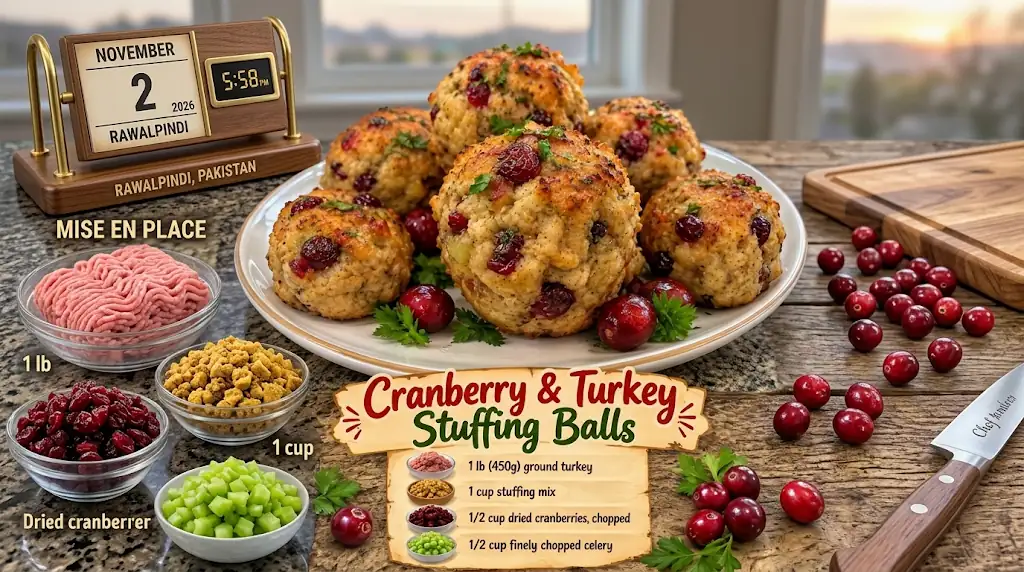
These anti-inflammatory cranberry and turkey stuffing balls give you everything you love about a holiday dinner in one warm, golden, bite-size ball: juicy turkey, soft savory stuffing flavor, fragrant sage and thyme, and little bursts of tart cranberry in every bite. They are baked instead of fried, made without boxed stuffing mix, white bread, butter, or refined sugar, and they are built from simple whole-food ingredients that support an anti-inflammatory way of eating. If you are looking for a healthy Thanksgiving side dish, a make-ahead holiday appetizer, or a high-protein meal-prep recipe you can enjoy all season long, this is the one to save.
Traditional stuffing balls are delicious, but they usually start with processed bread, packaged stuffing mix, butter, and sweetened dried cranberries. That combination can be heavy, salty, and full of refined ingredients. This healthier version keeps the cozy flavor and changes the building blocks. Lean ground turkey replaces fattier meats. Almond flour and ground flaxseed replace bread crumbs, which also makes the recipe naturally gluten-free and grain-free. Extra-virgin olive oil replaces butter. Unsweetened cranberries, fresh herbs, garlic, turmeric, and black pepper add the color, flavor, and plant compounds that make this recipe stand out.
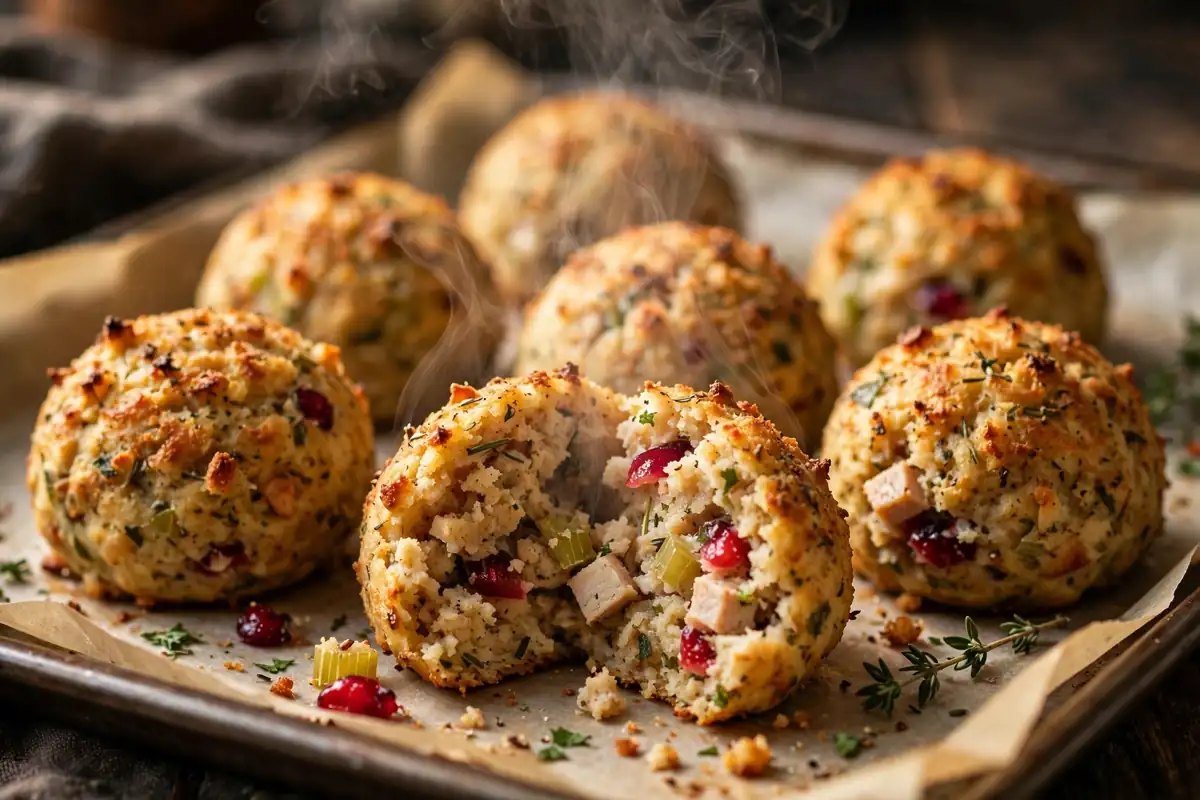
The result is a cranberry turkey stuffing ball that is crisp at the edges, tender in the center, and sturdy enough to pick up with your fingers, dip into warm gravy, or serve beside roasted vegetables. They taste festive enough for Thanksgiving and Christmas, but the recipe is easy enough for a regular weeknight dinner. Make a full batch, serve half tonight, and freeze the rest for a busy day when you want real comfort food without starting from scratch.
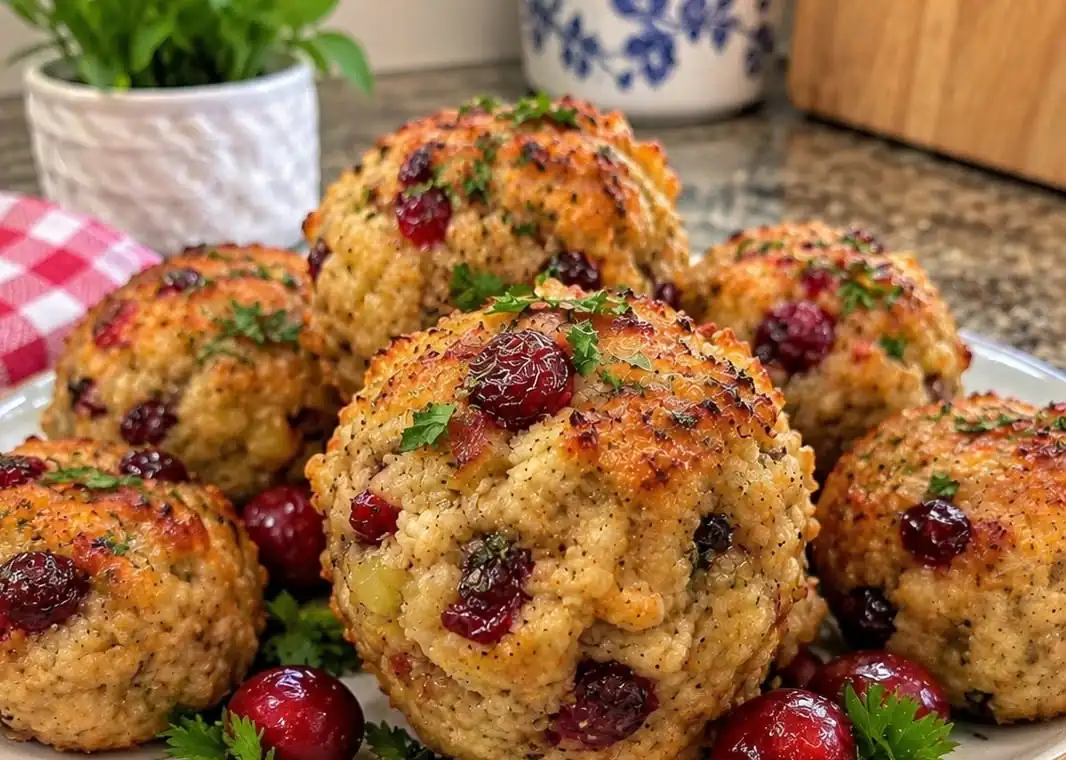
Table of Contents
Why You Will Love This Recipe
There are plenty of turkey stuffing ball recipes online, but this version was designed for people who want holiday flavor and ingredients they can feel good about. Here is why it works so well.
It tastes like Thanksgiving in one bite. Sage, thyme, rosemary, celery, onion, and turkey are the classic flavors of stuffing and roast turkey. Cranberry adds the sweet-tart contrast that makes every bite more interesting.
It is genuinely filling. Each serving has lean protein from turkey and egg, fiber from flaxseed, vegetables, and cranberries, and satisfying healthy fats from olive oil, almond flour, and walnuts. These are not empty snack bites; they can work as an appetizer, a side dish, or the main protein on your plate.
It is baked, not fried. Baking gives the outside a lightly crisp, golden finish without a pot of oil. A hot oven and a light brush of olive oil are all you need.
It is gluten-free and dairy-free. There is no bread, flour, milk, cheese, or butter in the base recipe. That makes these stuffing balls easier to share with guests who avoid gluten or dairy, as long as you check the labels on your broth and other packaged ingredients.
It is perfect for making ahead. You can mix and roll the balls a day in advance, freeze them before or after baking, and reheat them straight from frozen. Anyone who has cooked a holiday meal knows how valuable one make-ahead dish can be.
It uses simple, affordable ingredients. Nothing here requires a specialty store. Ground turkey, eggs, celery, onion, almond flour, cranberries, herbs, and a few pantry spices are easy to find in most large grocery stores.
What Makes These Stuffing Balls Anti-Inflammatory?
An anti-inflammatory recipe is not magic, and no single food can diagnose, treat, or cure a health condition. The idea is much simpler and more practical: build the dish from whole ingredients that are rich in fiber, antioxidants, herbs, spices, and healthy fats, and leave out the heavily processed ingredients that add lots of refined starch, added sugar, and excess sodium without adding much nutrition.
In this recipe, that idea shows up in every part of the ingredient list. Turkey is a lean, complete protein that helps make the meal satisfying. Cranberries bring a naturally tart flavor and deep red color from plant compounds called polyphenols; using unsweetened cranberries keeps the added sugar low. Turmeric is the warm golden spice widely used in anti-inflammatory cooking, and a pinch of black pepper is traditionally paired with it because pepper helps the body use curcumin, the best-known compound in turmeric. Garlic, onion, celery, and fresh herbs do double duty: they build the savory stuffing flavor while adding aroma and plant nutrients without extra calories. Extra-virgin olive oil replaces butter with a fat that is central to Mediterranean-style eating. Walnuts and ground flaxseed add crunch, fiber, and plant omega-3 fats. Almond flour holds the mixture together without refined white flour or bread crumbs.
Just as important is what is not in the bowl. There is no boxed stuffing mix with a long ingredient list, no sausage or processed meat, no deep-frying, and no sugary cranberry sauce mixed into the base. You still get a golden, comforting result, but the ingredient list stays short and recognizable. That is what makes these healthy turkey stuffing balls different from the standard holiday version, and it is why they fit just as well on a weeknight anti-inflammatory dinner plate as they do on a Thanksgiving table.
Ingredients You Will Need
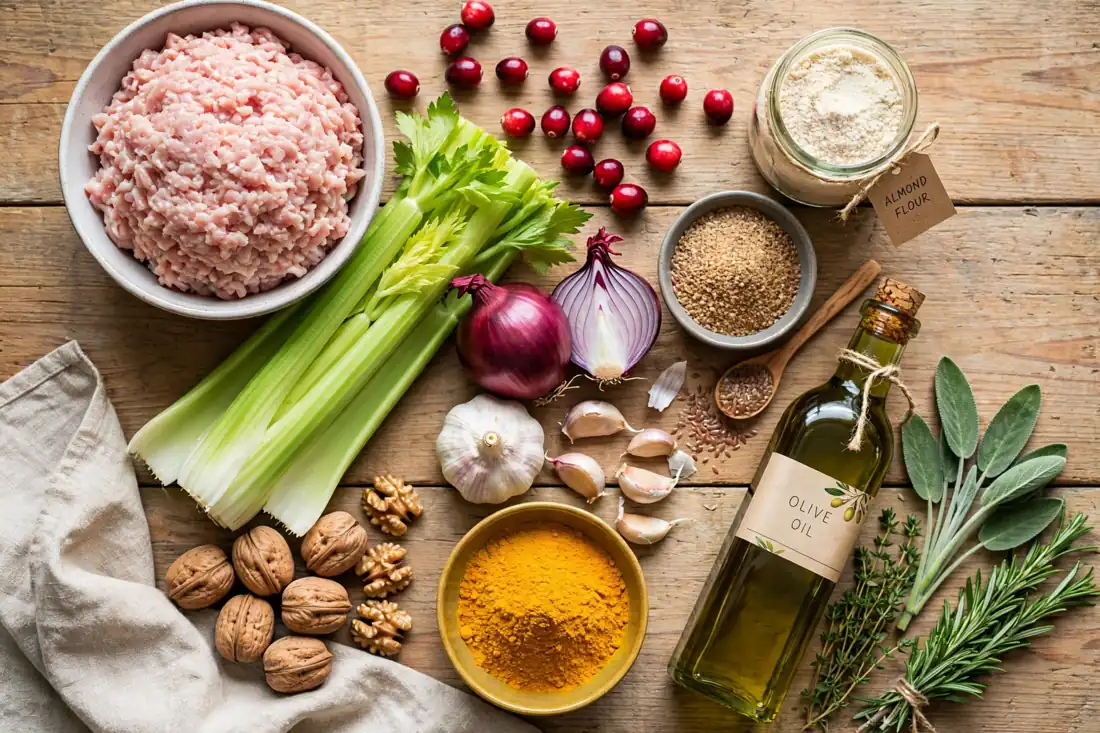
This recipe makes about 18 stuffing balls, or 6 servings of 3 balls each. You will find the exact amounts in the recipe card at the bottom of this post. Here is what each ingredient does, so you can shop and substitute with confidence.
Lean ground turkey. Use 93% lean ground turkey for the best balance of moisture and structure. Very lean 99% turkey breast works, but the balls can dry out more quickly, so watch the baking time closely. Ground turkey is the base of the recipe, so choose fresh turkey with no added sauces or fillers.
Almond flour. Fine, blanched almond flour replaces bread crumbs and helps bind the mixture while keeping the recipe gluten-free and grain-free. It also gives the finished balls a tender, almost stuffing-like texture.
Ground flaxseed. Flax works with the egg to hold everything together and adds fiber. When it meets the moisture from the turkey and broth, it helps the mixture firm up during a short rest in the refrigerator.
Unsweetened dried cranberries, chopped. Look for cranberries with no added sugar or sweetened only with a little fruit juice if unsweetened ones are hard to find. Chopping them spreads the tart flavor through every ball instead of leaving a few big chewy pieces. You can also use finely chopped fresh cranberries; the flavor will be brighter and more tart.
Celery and yellow onion. These two vegetables are the backbone of classic stuffing flavor. Dice them very finely so they soften in the oven and blend into the balls instead of creating large crunchy chunks.
Garlic. Fresh minced garlic gives the recipe a deeper savory flavor. Garlic powder can work in a pinch, but fresh garlic is worth it here.
Egg. One large egg binds the mixture. Bring it to room temperature if you remember, because it mixes in more evenly.
Extra-virgin olive oil. A little olive oil is brushed over the balls before baking for color and crisp edges, and a small amount can be used to soften the vegetables first if you prefer them extra tender.
Low-sodium chicken or turkey broth. Just a few tablespoons add moisture and classic stuffing flavor. Low-sodium broth lets you control the salt yourself.
Fresh sage, thyme, and rosemary. Fresh herbs make a real difference in a stuffing recipe. Sage is the signature herb, thyme adds warmth, and a little rosemary adds a piney, holiday aroma. Dried herbs also work; the amounts are listed in the substitutions section below.
Ground turmeric and black pepper. Turmeric adds warm color and earthy flavor in a small amount that does not overpower the herbs. Black pepper adds gentle heat and pairs with turmeric in anti-inflammatory cooking.
Ground ginger. Just a little ginger adds warmth in the background. Most people will not identify it, but they will notice that the flavor tastes complete.
Finely chopped walnuts. Walnuts add a soft crunch and healthy fats. They are optional, so leave them out for a nut-free version and add an extra tablespoon of almond flour or sunflower seeds instead.
Sea salt. Season carefully, especially if your broth is not low-sodium. You can always add a pinch at the table, but you cannot take salt away once the balls are baked.
Ingredient Substitutions and Swaps
No ground turkey? Ground chicken works in the same amount and at the same temperature. For a leftover version, these balls are best with raw ground poultry because it binds the mixture; cooked shredded turkey will not hold together the same way without extra egg and binder.
Need a nut-free version? Replace the almond flour with sunflower seed flour in the same amount and leave out the walnuts. The color may deepen slightly in the oven, but the texture stays tender.
Only have dried herbs? Use 1 teaspoon dried sage, 1/2 teaspoon dried thyme, and 1/4 teaspoon dried rosemary in place of the fresh herbs. Dried herbs are stronger, so do not use the same volume as fresh.
Fresh cranberries instead of dried? Use 3/4 cup finely chopped fresh cranberries and add 1 to 2 teaspoons of honey or maple syrup only if you want to soften the tartness. Keep in mind that honey and maple syrup add sugar, so the strictest anti-inflammatory version leaves them out.
Egg-free option. Replace the egg with one flax egg made from 1 tablespoon ground flaxseed mixed with 3 tablespoons warm water, rested for 10 minutes. The balls will be slightly more delicate, so chill them well before baking and handle them gently.
Prefer a classic stuffing-mix version? If gluten-free and grain-free are not important to you, you can replace the almond flour and flaxseed with 1 cup stuffing mix or 1 1/2 cups fine whole-grain bread crumbs, and reduce the broth to 1 to 2 tablespoons because the mix absorbs moisture as it rests. The texture will be closer to traditional stuffing, although the nutrition profile will change and the result will no longer be gluten-free.
Equipment You Will Need
You do not need special equipment for this recipe. A large mixing bowl, a sharp knife and cutting board, a rimmed baking sheet, parchment paper, a tablespoon or small cookie scoop, a pastry brush, and an instant-read food thermometer are enough. The thermometer matters most: poultry must reach a safe internal temperature of 165°F (74°C), and color alone is not a reliable way to judge doneness. A cookie scoop is the easiest way to make balls that are all the same size, which helps them bake evenly and finish at the same time.
How to Make Anti-Inflammatory Cranberry & Turkey Stuffing Balls
Step 1: Heat the oven and prepare the pan. Preheat your oven to 400°F (200°C). Line a large rimmed baking sheet with parchment paper. The rim keeps any balls from rolling off when you move the pan, and the parchment makes cleanup easy and helps prevent sticking without extra oil or cooking spray.
Step 2: Soften the vegetables (optional but recommended). For the most tender result, warm 1 teaspoon of olive oil in a small skillet over medium heat. Add the finely diced onion and celery with a pinch of salt and cook for 4 to 5 minutes, until softened and sweet. Stir in the garlic for the last 30 seconds. Let the mixture cool for a few minutes so it does not warm the raw turkey. If you are short on time, you can add the vegetables raw, but dice them extra fine and know that they will keep a little more bite.
Step 3: Combine the dry ingredients. In a large mixing bowl, stir together the almond flour, ground flaxseed, chopped cranberries, walnuts, turmeric, black pepper, ginger, and salt. Mixing the dry ingredients first spreads the spices and cranberries evenly, so no single ball gets a mouthful of turmeric or salt.
Step 4: Add the turkey and wet ingredients. Add the ground turkey, cooled vegetables, beaten egg, chopped fresh herbs, and 3 tablespoons of broth to the bowl. Use clean hands or a sturdy spoon to mix just until everything is evenly combined. Stop as soon as the mixture comes together. Overmixing ground poultry makes the finished texture firm and bouncy instead of tender, so a light hand really matters here.
Step 5: Rest the mixture. Cover the bowl and refrigerate it for 20 to 30 minutes. This short rest lets the flaxseed and almond flour absorb moisture, which makes the mixture much easier to roll and helps the balls keep their shape in the oven. If the mixture still feels very wet after resting, stir in one extra tablespoon of almond flour. If it feels dry and crumbly, add broth one teaspoon at a time.
Step 6: Roll the balls. Scoop about 2 tablespoons of mixture for each ball and roll it gently between your palms. You should get about 18 balls, each roughly 1 1/2 inches wide. Place them on the prepared baking sheet with a little space between them so hot air can circulate and the sides can brown instead of steam. Lightly damp hands make rolling easier and stop the mixture from sticking to your skin.
Step 7: Brush with olive oil. Brush or drizzle the tops with the remaining olive oil. This small step gives the balls their golden color and lightly crisp edges, and it helps the outside set as they bake.
Step 8: Bake until golden and cooked through. Bake for 22 to 25 minutes, turning the pan halfway through, until the balls are golden brown and firm to the touch. Check the center of the largest ball with an instant-read thermometer; it must read 165°F (74°C). If the balls are browning too quickly on top, move the pan to a lower rack for the last few minutes.
Step 9: Rest and serve. Let the stuffing balls rest on the pan for 5 minutes before serving. Resting keeps the juices inside and makes them easier to move without breaking. Garnish with a few fresh sage leaves or extra chopped herbs if you like, and serve warm.
Pro Tips for the Best Stuffing Balls
Dice everything small. Small pieces of onion, celery, cranberry, and walnut distribute flavor evenly and help the balls hold together. Large chunks create weak spots where a ball can split in the oven.
Do not skip the chill. Twenty minutes in the refrigerator is the difference between a sticky mixture that is hard to roll and a firm mixture that shapes in seconds. It is also a useful make-ahead pause if guests arrive early.
Use a scoop for even sizes. Balls that are the same size bake at the same speed. If some are much larger than others, the small ones can dry out while the large ones are still finishing in the center.
Trust the thermometer, not the color. Almond flour browns faster than bread crumbs, so the outside can look deeply golden before the center is ready, or the opposite can happen in a slow oven. A quick temperature check removes the guesswork and keeps the turkey safe to eat.
Keep the mixture cold and your hands light. Warm, overworked poultry makes dense balls. Mix gently, roll quickly, and get the pan into the hot oven while the mixture is still cool.
Make them crispier with air flow. For extra-crisp bottoms, bake the balls on a wire rack set inside the rimmed sheet, or flip them carefully in the last 5 minutes. In an air fryer, cook at 375°F (190°C) for 12 to 15 minutes, turning once, and check the temperature before serving.
Easy Variations to Try
Once you have made the base recipe, it is easy to adapt to your table and your pantry. For a sweet potato version, stir 1/4 cup finely grated sweet potato into the mixture; it adds color, gentle sweetness, and extra fiber. For a spicier version, add a pinch of red pepper flakes or finely diced fresh ginger. For a leftover herb version, use whatever soft fresh herbs you have — parsley, chives, and a little dill all work — as long as sage stays in the mix for that classic stuffing flavor. For mini appetizer balls, roll 1 tablespoon of mixture per ball, bake for 16 to 18 minutes, and serve with toothpicks and a small bowl of warm gravy or unsweetened cranberry sauce for dipping. For a sheet-pan dinner, bake the balls beside cubes of sweet potato, Brussels sprouts, and red onion tossed with olive oil and herbs, and serve everything together with a big green salad.
What to Serve With Cranberry Turkey Stuffing Balls
These stuffing balls are flexible, which is part of their appeal. On a holiday table, serve them beside roasted vegetables, mashed cauliflower or sweet potatoes, green beans, and a simple turkey gravy. The cranberry inside the balls means you may not need a very sweet cranberry sauce on the side; a tart, lightly sweetened whole-berry sauce or even a spoonful of unsweetened cranberry relish is a better match. For an everyday anti-inflammatory dinner, serve three or four balls with roasted broccoli or Brussels sprouts, a leafy salad with an olive oil and lemon dressing, or a bowl of cauliflower rice pilaf. For lunch the next day, slice leftover balls and tuck them into lettuce wraps with shredded carrot, cucumber, and a mustard or herb sauce. They also work surprisingly well on top of a warm grain-free bowl with roasted squash and greens, where they take the place of meatballs.
Storage, Freezing, and Reheating Instructions
Refrigerator. Cool the baked stuffing balls completely, then store them in an airtight container in the refrigerator for up to 4 days. Keep them in a single layer or separate layers with parchment so they do not stick together.
Freezer (baked). Freeze cooled baked balls on a parchment-lined tray until solid, about 2 hours, then transfer them to a freezer bag or container with the air pressed out. They keep well for up to 3 months. This is the best method for holiday prep because reheating is simple and the texture stays good.
Freezer (unbaked). Roll the raw balls, freeze them solid on a tray, and store them the same way for up to 2 months. Bake from frozen at 400°F (200°C) for 28 to 32 minutes and confirm the center reaches 165°F (74°C). Do not thaw raw poultry balls on the counter; if you prefer to thaw them first, do it overnight in the refrigerator.
Reheating. For the best texture, reheat in a 350°F (175°C) oven or air fryer for 8 to 12 minutes, or 15 to 18 minutes from frozen, until hot in the center. The microwave works for a quick lunch — about 1 to 2 minutes, covered — but the outside will be softer. A splash of broth over the balls before oven reheating helps keep them moist.
Make-ahead for holidays. Mix and roll the balls up to 24 hours in advance, cover the tray tightly, and refrigerate. Brush with olive oil just before baking. This gives you a fresh-baked dish on the day with almost no last-minute work, which is exactly what a busy holiday kitchen needs.
Nutrition Information
The values below are an estimate for one serving of 3 stuffing balls, calculated from the ingredients in the recipe card. Actual values will change with the brand of turkey, broth, almond flour, and cranberries you use, and with any substitutions. This information is provided for general guidance only and is not medical or dietary advice. If you follow a specific eating plan for a health condition, check the recipe with your own care team or dietitian.
One serving provides approximately 290 calories, 24 grams of protein, 9 grams of total carbohydrates, 3 grams of fiber, 6 grams of net carbohydrates, 17 grams of fat, and 4 grams of naturally occurring and unsweetened-fruit sugars. Compared with traditional bread-based stuffing balls made with butter and sweetened cranberries, this version is higher in protein and fiber, lower in carbohydrates and added sugar, and gets most of its fat from olive oil, almond flour, walnuts, and flaxseed instead of butter. That balance is why many readers enjoy these balls as a light main dish rather than only as a holiday side.
Frequently Asked Questions
Are cranberry turkey stuffing balls really anti-inflammatory?
They are built to fit an anti-inflammatory style of eating, not to treat a condition. The recipe uses lean turkey, olive oil, turmeric, black pepper, ginger, garlic, herbs, walnuts, flaxseed, and unsweetened cranberries, and it leaves out processed stuffing mix, refined white bread, butter, and added sugar. Those ingredient choices are the point of the recipe. Anyone managing inflammation as part of a medical condition should treat this as a wholesome food option, not as medical advice.
Can I make these stuffing balls ahead of time?
Yes, and they are one of the best holiday recipes to make ahead. You can roll the raw balls and refrigerate them for up to 24 hours before baking, freeze the raw balls for up to 2 months, or freeze the fully baked balls for up to 3 months. Bake or reheat until the center reaches 165°F (74°C). Making them ahead frees oven space and removes one stressful job from the day you serve them.
Can I use leftover cooked turkey instead of ground turkey?
This specific recipe works best with raw ground turkey or ground chicken, because the raw poultry binds with the egg, almond flour, and flaxseed as it bakes. Cooked shredded turkey does not bind in the same way and tends to make dry, crumbly balls. If you have leftover roast turkey to use up, chop it finely and look for a leftover-turkey stuffing ball method that uses prepared stuffing and gravy as the binder instead.
How do I keep turkey stuffing balls from drying out?
Use 93% lean turkey rather than the leanest turkey breast, do not overbake, and check the temperature early. Pull the pan as soon as the center reaches 165°F (74°C), rest the balls for 5 minutes, and avoid pressing or squeezing them while mixing and rolling. The olive oil, egg, broth, and vegetables in the mixture also help, which is why measuring them properly matters.
Are these cranberry and turkey stuffing balls gluten-free?
Yes, the base recipe is gluten-free and grain-free because almond flour and ground flaxseed replace bread crumbs. To keep it safely gluten-free for someone with celiac disease or a serious sensitivity, check that your broth, spices, cranberries, and almond flour are certified gluten-free and that they were not processed with wheat ingredients.
Can I cook them in an air fryer?
Yes. Arrange the balls in a single layer with space between them, air fry at 375°F (190°C) for 12 to 15 minutes, turn once halfway, and check that the center reaches 165°F (74°C). Work in batches if needed; crowding the basket steams the balls and stops them from browning.
Final Thoughts
If you want the flavor of holiday stuffing without the heavy, processed ingredients that usually come with it, these anti-inflammatory cranberry and turkey stuffing balls deserve a place on your table. They are golden, tender, full of herbs, and brightened by real cranberry, and they work as an appetizer, a side dish, a meal-prep protein, or a freezer-friendly holiday backup plan. Make a batch for dinner this week, freeze a second batch for the holidays, and enjoy comfort food that still fits the way you want to eat. If you try the recipe, share how you served yours — with gravy, with roasted vegetables, or straight off the tray while they are still warm.
Recipe Card
Anti-Inflammatory Cranberry & Turkey Stuffing Balls
Golden, tender baked turkey stuffing balls with tart cranberries, fresh sage, thyme, turmeric, and olive oil. Gluten-free, dairy-free, and made without bread crumbs, boxed stuffing mix, butter, or refined sugar.
Prep Time: 20 minutes, plus 20 minutes chilling Cook Time: 25 minutes Total Time: 1 hour 5 minutes Yield: 18 stuffing balls Servings: 6 servings (3 balls each) Category: Appetizer, Side Dish, Main Dish Cuisine: American Keywords: anti-inflammatory cranberry turkey stuffing balls, turkey stuffing balls, cranberry stuffing balls, healthy stuffing balls, gluten-free stuffing balls
Ingredients
- 1 pound (450 g) lean ground turkey, 93% lean
- 3/4 cup (84 g) fine blanched almond flour
- 2 tablespoons ground flaxseed
- 1/2 cup (60 g) unsweetened dried cranberries, roughly chopped
- 1/2 cup (50 g) celery, very finely diced
- 1/2 cup (75 g) yellow onion, very finely diced
- 2 cloves garlic, minced
- 1 large egg, beaten
- 3 to 4 tablespoons low-sodium chicken or turkey broth
- 2 tablespoons extra-virgin olive oil, divided
- 1 tablespoon fresh sage, finely chopped
- 2 teaspoons fresh thyme leaves
- 1 teaspoon fresh rosemary, finely chopped
- 1/2 teaspoon ground turmeric
- 1/2 teaspoon sea salt, plus a pinch for the vegetables
- 1/4 teaspoon black pepper
- 1/4 teaspoon ground ginger
- 1/4 cup (30 g) walnuts, finely chopped (optional)
Instructions
- Preheat the oven to 400°F (200°C) and line a rimmed baking sheet with parchment paper.
- Optional: soften the onion and celery in 1 teaspoon olive oil over medium heat for 4 to 5 minutes, add the garlic for 30 seconds, then cool.
- Stir the almond flour, flaxseed, cranberries, walnuts, turmeric, salt, black pepper, and ginger together in a large bowl.
- Add the turkey, cooled vegetables, egg, herbs, and 3 tablespoons broth. Mix gently just until combined.
- Cover and refrigerate for 20 to 30 minutes.
- Roll about 2 tablespoons of mixture per ball to make 18 balls. Place them on the baking sheet with space between them.
- Brush the tops with the remaining olive oil.
- Bake for 22 to 25 minutes, turning the pan halfway, until golden and the center reaches 165°F (74°C).
- Rest for 5 minutes and serve warm.
Notes
- For dried herbs, use 1 teaspoon dried sage, 1/2 teaspoon dried thyme, and 1/4 teaspoon dried rosemary.
- For a nut-free version, replace almond flour with sunflower seed flour and omit the walnuts.
- Nutrition is an estimate per serving of 3 balls: approximately 290 calories, 24 g protein, 9 g carbohydrates, 3 g fiber, 6 g net carbs, 17 g fat, 4 g sugar.