
Description: Follow this easy 30-day keto diet meal plan for weight loss with daily meals, portions, food swaps, shopping tips, and guidance for women.
Table of Contents
Keto Diet Meal Plan for Weight Loss
Starting a keto diet can feel confusing. How many carbohydrates should you eat? What foods should be on your plate? Do you need to count calories? Can women follow keto safely? What should you eat for breakfast, lunch, and dinner?
This 30-day keto diet meal plan for weight loss is designed to make those questions easier to answer.
Instead of relying on extreme restriction, the goal is to create a practical low-carbohydrate eating pattern built around protein, non-starchy vegetables, healthy fats, and minimally processed foods.
A ketogenic diet typically restricts carbohydrates enough to encourage the body to produce ketones and use more fat for energy. Common ketogenic approaches use approximately 20–50 grams of carbohydrates per day, although individual requirements vary.
For weight loss, however, keto is not magic. The most successful plan is one that creates an appropriate calorie deficit while providing enough protein, fiber, micronutrients, and satisfying food to make the diet sustainable.
Research suggests low-carbohydrate diets can produce greater short-term weight loss in some people, but differences compared with other calorie-controlled diets may become smaller over time.
That is why this meal plan focuses on consistency, portion control, food quality, and flexibility rather than simply eating unlimited bacon, butter, cheese, and heavy cream.
Who Is This Keto Meal Plan For?
This meal plan can be used as a general framework for healthy adults who want to reduce carbohydrate intake and manage their calorie intake.
It can be adapted for:
- Women trying to lose weight
- Men trying to lose weight
- Keto beginners
- People who prefer simple meals
- Busy professionals
- People who meal prep
- People who enjoy chicken, beef, eggs, seafood, and vegetables
- People following a lower-carbohydrate lifestyle
- People who want a structured 30-day eating schedule
However, one meal plan cannot safely cover every person’s nutritional needs.
Your calorie, protein, carbohydrate, and fat requirements can change according to your age, height, weight, activity level, medications, medical conditions, pregnancy status, breastfeeding status, and other individual factors.
Important Keto Safety Information
Before starting a ketogenic diet, talk with your doctor or a registered dietitian if you have a medical condition or take prescription medication.
Extra caution is particularly important for people taking diabetes medications, especially SGLT2 inhibitors, because carbohydrate restriction can require medication adjustments and may increase the risk of ketoacidosis in certain circumstances.
A ketogenic diet should not be treated as a universal diet for everyone.
Pregnant or breastfeeding women should not start a strict weight-loss keto diet without individualized medical and nutrition guidance.
People with kidney, liver, gallbladder, pancreatic, metabolic, or other significant medical conditions should also seek professional guidance before making major dietary changes.
This article provides general nutrition information and is not a substitute for individualized medical advice.
How Does Keto Help With Weight Loss?
A ketogenic diet reduces carbohydrate intake and changes the body’s fuel availability.
When carbohydrate intake becomes sufficiently low, insulin levels may decrease and the body increases ketone production. Ketosis can also help some people feel less hungry, which may make it easier to consume fewer calories.
But there is an important distinction:
Ketosis does not automatically mean fat loss.
Weight loss still depends on the overall energy balance over time.
For that reason, a weight-loss keto plan should emphasize:
- Appropriate portions
- Adequate protein
- Plenty of non-starchy vegetables
- High-quality fats
- Limited added sugar
- Minimal ultra-processed foods
- Adequate hydration
- Regular physical activity
- Good sleep
- Long-term consistency
Healthy weight management is influenced by nutrition, physical activity, sleep, stress, medications, genetics, age, and medical conditions.
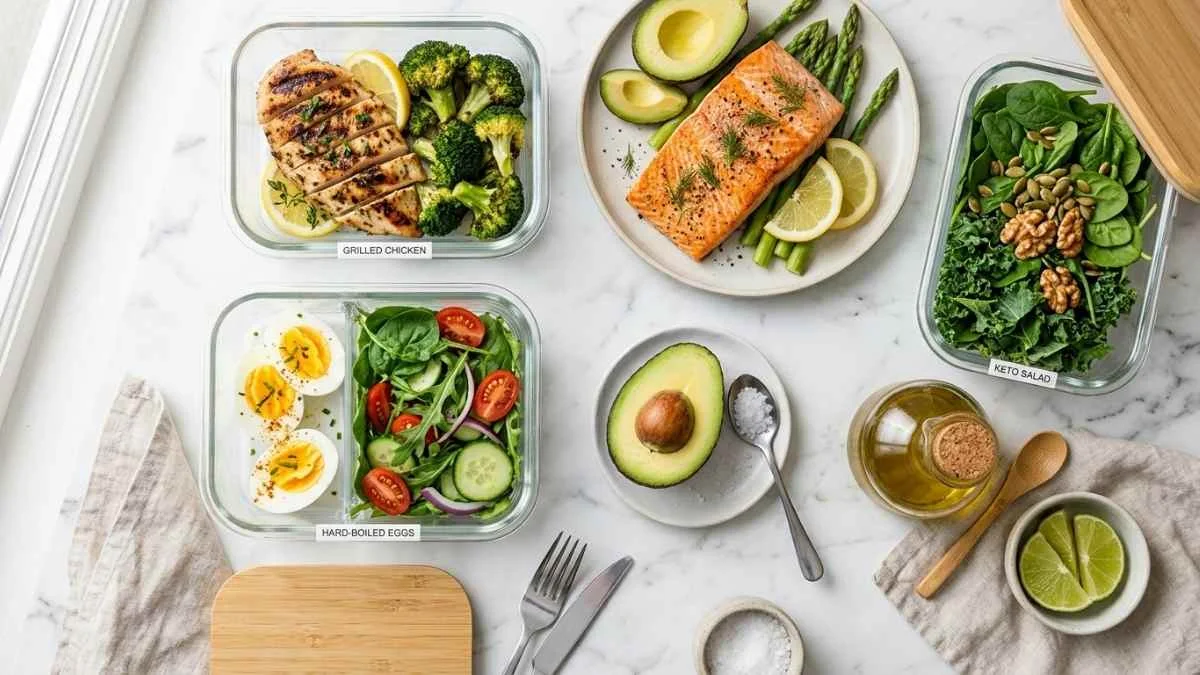
How Many Carbs Should You Eat on Keto?
There is no single carbohydrate number that works for every person.
A common ketogenic range is approximately:
20–50 grams of carbohydrates per day.
Some people use total carbohydrates, while others track net carbohydrates.
Net Carbs
A simple calculation commonly used by keto followers is:
Net Carbs = Total Carbohydrates − Fiber
For example, if a food contains:
- Total carbohydrates: 10 g
- Fiber: 4 g
The commonly calculated net carbohydrate amount would be:
6 g net carbs
However, nutrition labels and fiber calculations can differ by country, and sugar alcohols should not automatically be subtracted in full because their effects vary.
For beginners, focusing on whole foods and reasonable carbohydrate portions can be simpler than obsessively calculating every gram.
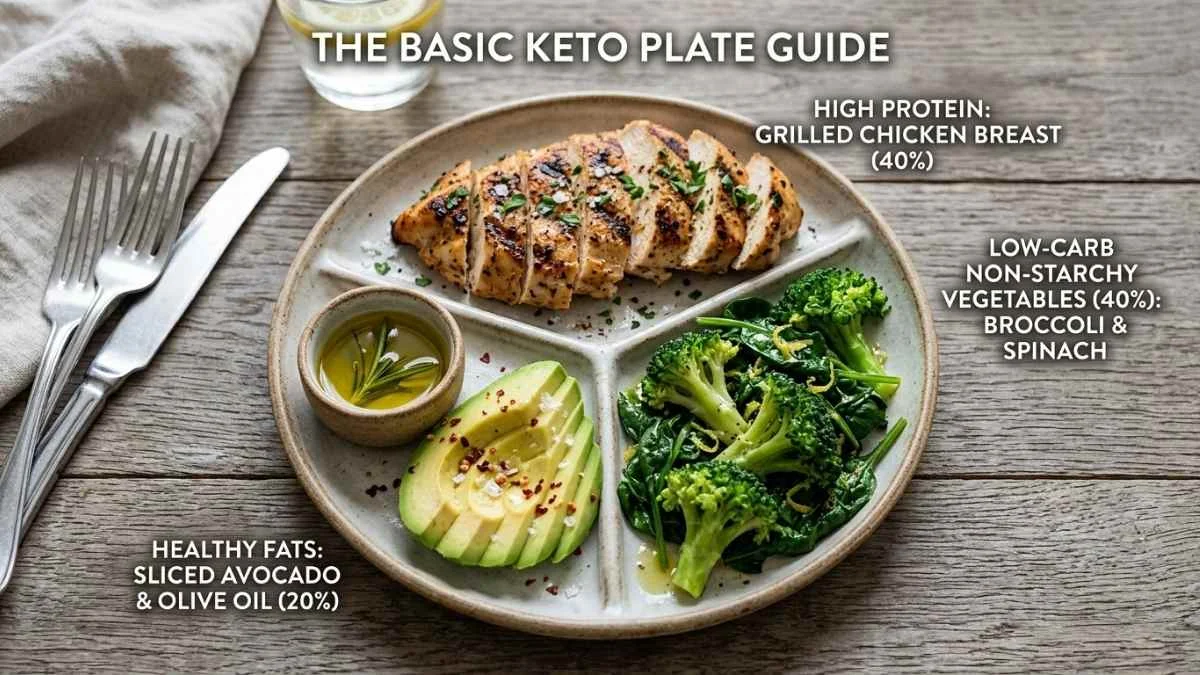
The Basic Keto Plate
A simple keto meal can follow this structure:
1. Protein
Choose one:
- Chicken
- Turkey
- Eggs
- Salmon
- Tuna
- Shrimp
- Lean beef
- Greek yogurt without added sugar
- Cottage cheese
- Tofu, when appropriate
2. Non-Starchy Vegetables
Choose 1–2 generous servings:
- Spinach
- Broccoli
- Cauliflower
- Zucchini
- Cucumber
- Lettuce
- Cabbage
- Mushrooms
- Bell peppers
- Green beans
- Asparagus
- Brussels sprouts
3. Healthy Fat
Use a moderate amount of:
- Extra-virgin olive oil
- Avocado
- Nuts
- Seeds
- Olives
- Nut butter
- Fatty fish
The goal is not to add unlimited fat simply because the diet is ketogenic.
Protein Is Especially Important During Weight Loss
One common mistake on keto is eating lots of fat while not eating enough protein.
Protein helps support muscle maintenance during weight loss and can improve meal satisfaction.
Good protein sources include:
- Eggs
- Chicken breast
- Chicken thighs
- Turkey
- Lean beef
- Salmon
- Tuna
- Shrimp
- Cottage cheese
- Plain Greek yogurt
Your exact protein requirement should be individualized according to your body size, activity level, age, health status, and goals.
For a general meal-planning approach, include a meaningful protein source at each main meal instead of trying to obtain most calories from butter, cheese, cream, and oils.
Keto Foods to Eat
Protein Foods
- Eggs
- Chicken
- Turkey
- Beef
- Salmon
- Tuna
- Sardines
- Shrimp
- Other seafood
Low-Carb Vegetables
- Spinach
- Kale
- Lettuce
- Broccoli
- Cauliflower
- Cucumber
- Zucchini
- Cabbage
- Mushrooms
- Asparagus
- Green beans
Healthy Fats
- Olive oil
- Avocado
- Olives
- Almonds
- Walnuts
- Pecans
- Chia seeds
- Flaxseeds
Dairy
Choose unsweetened options:
- Greek yogurt
- Cottage cheese
- Cheese
- Cream cheese
- Unsweetened full-fat yogurt
Portion sizes matter because dairy can add calories and carbohydrates.
Foods to Limit or Avoid
For a strict ketogenic approach, limit foods that provide large amounts of rapidly digestible carbohydrates.
These include:
- Sugar
- Candy
- Cookies
- Cakes
- Donuts
- Regular soda
- Sweetened juices
- Sweetened coffee drinks
- White bread
- Pasta
- Regular rice
- Potatoes
- Most breakfast cereals
- Sweetened yogurt
- Pastries
- Many processed snack foods
Higher-carbohydrate foods such as beans, lentils, whole grains, and most fruits may not fit comfortably into a strict ketogenic carbohydrate target.
That does not mean these foods are inherently unhealthy. It simply means they generally contain more carbohydrate and may need to be limited in a strict keto plan.
30-Day Keto Diet Meal Plan
The following chart provides a flexible four-week framework.
Important: Portions should be adjusted according to individual energy needs. The plan is a template, not a prescription for a specific calorie intake.
Week 1 – Keto Beginner Week
| Day | Breakfast | Lunch | Dinner | Optional Snack |
|---|---|---|---|---|
| Day 1 | 2 eggs with spinach + avocado | Grilled chicken salad | Salmon + roasted broccoli | Small handful of almonds |
| Day 2 | Greek yogurt + chia seeds + a few berries | Chicken lettuce wraps | Beef + cauliflower rice | Boiled egg |
| Day 3 | Omelet with mushrooms and cheese | Tuna cucumber salad | Garlic chicken + zucchini | Cottage cheese |
| Day 4 | Scrambled eggs + avocado | Chicken Caesar-style salad | Beef stir-fry + broccoli | Walnuts |
| Day 5 | Egg muffins + spinach | Turkey lettuce wraps | Baked salmon + asparagus | Greek yogurt |
| Day 6 | Eggs + mushrooms + avocado | Chicken salad bowl | Beef burger bowl + salad | Cheese |
| Day 7 | Omelet + vegetables | Tuna salad + cucumber | Roast chicken + cauliflower mash | Almonds |
Week 2 – High-Protein Keto Week
| Day | Breakfast | Lunch | Dinner | Optional Snack |
|---|---|---|---|---|
| Day 8 | Eggs + avocado | Grilled chicken salad | Salmon + zucchini | Boiled egg |
| Day 9 | Greek yogurt + chia | Turkey lettuce wraps | Beef + broccoli | Walnuts |
| Day 10 | Spinach omelet | Tuna salad | Chicken fajita bowl without tortillas | Cottage cheese |
| Day 11 | Eggs + mushrooms | Chicken cucumber bowl | Garlic shrimp + vegetables | Almonds |
| Day 12 | Egg muffins | Turkey salad | Beef meatballs + zucchini | Greek yogurt |
| Day 13 | Scrambled eggs + avocado | Chicken Caesar-style bowl | Baked salmon + broccoli | Cheese |
| Day 14 | Omelet + spinach | Tuna lettuce wraps | Roast chicken + green beans | Small handful of nuts |
Week 3 – Simple Meal-Prep Keto Week
| Day | Breakfast | Lunch | Dinner | Optional Snack |
|---|---|---|---|---|
| Day 15 | Eggs + spinach | Meal-prep chicken salad | Beef + cauliflower rice | Boiled egg |
| Day 16 | Greek yogurt + chia | Leftover chicken bowl | Salmon + asparagus | Almonds |
| Day 17 | Omelet + mushrooms | Tuna salad | Chicken + broccoli | Cottage cheese |
| Day 18 | Eggs + avocado | Turkey lettuce wraps | Beef stir-fry | Walnuts |
| Day 19 | Egg muffins | Chicken salad | Shrimp + zucchini | Greek yogurt |
| Day 20 | Scrambled eggs | Tuna cucumber bowl | Salmon + cauliflower | Cheese |
| Day 21 | Omelet + vegetables | Chicken lettuce wraps | Beef + roasted vegetables | Boiled egg |
Week 4 – Sustainable Keto Week
| Day | Breakfast | Lunch | Dinner | Optional Snack |
|---|---|---|---|---|
| Day 22 | Eggs + avocado | Chicken salad | Salmon + broccoli | Almonds |
| Day 23 | Greek yogurt + chia | Tuna lettuce wraps | Beef + cauliflower rice | Boiled egg |
| Day 24 | Spinach omelet | Chicken bowl | Shrimp + zucchini | Cottage cheese |
| Day 25 | Eggs + mushrooms | Turkey salad | Roast chicken + vegetables | Walnuts |
| Day 26 | Egg muffins | Tuna cucumber salad | Beef + broccoli | Greek yogurt |
| Day 27 | Eggs + avocado | Chicken lettuce wraps | Salmon + asparagus | Cheese |
| Day 28 | Omelet + vegetables | Chicken salad | Beef burger bowl | Almonds |
| Day 29 | Greek yogurt + chia | Tuna salad | Garlic chicken + zucchini | Boiled egg |
| Day 30 | Eggs + avocado | Grilled chicken salad | Salmon + roasted vegetables | Optional small serving of nuts |
What About Days 31 and Beyond?
After completing 30 days, do not assume that you need to make your diet even more restrictive.
Instead, review:
- Your average weight trend
- Waist measurement
- Hunger levels
- Energy
- Exercise performance
- Sleep
- Digestive comfort
- Food cravings
- Ability to follow the plan socially
- Overall satisfaction
If the plan feels sustainable, continue using the meal structure while rotating foods.
If you are constantly hungry, tired, overly restrictive, or unable to maintain the plan, it may be time to adjust your calories, carbohydrate level, food choices, or overall dietary approach.
How to Adjust the Plan for Different Body Sizes
There is no scientifically reliable “one keto diet for every body type.”
Instead, think about energy needs and lifestyle.
Smaller or Less Active Adults
Start with smaller portions of calorie-dense foods such as:
- Nuts
- Cheese
- Oils
- Avocado
- Nut butter
Keep protein and vegetables consistent.
Larger or More Active Adults
They may require larger portions of:
- Chicken
- Beef
- Fish
- Eggs
- Greek yogurt
- Vegetables
An active person may also need more total calories.
Strength Training or Highly Active Women
Do not automatically cut calories aggressively.
Prioritize:
- Adequate protein
- Hydration
- Electrolytes
- Recovery
- Sleep
- Sufficient calories
Very aggressive calorie restriction can make exercise performance and adherence more difficult.
Keto Meal Plan for Women
Women often have changing nutritional needs throughout different life stages.
The same plan should not automatically be used for:
- A 20-year-old active woman
- A 35-year-old sedentary woman
- A woman approaching menopause
- A pregnant woman
- A breastfeeding mother
- A postmenopausal woman
Women Trying to Lose Weight
Focus on:
- Adequate protein
- Plenty of vegetables
- Moderate healthy fats
- Controlled portions
- Regular activity
- Adequate sleep
Avoid the common mistake of eating unlimited keto desserts simply because they are low in carbohydrates.
Keto-friendly does not automatically mean calorie-free.
Keto and Menopause
During menopause, changes in body composition, activity, appetite, sleep, and hormones can influence weight management.
A useful approach is to emphasize:
- Protein at every meal
- Resistance training
- Vegetables
- Fiber-rich low-carbohydrate foods
- Healthy fats
- Adequate hydration
- Sleep
- Portion awareness
Do not assume that increasing dietary fat indefinitely will automatically improve weight loss.
Keto Breakfast Ideas
You do not need complicated keto recipes every morning.
Try:
Option 1
2 eggs + spinach + avocado
Option 2
Vegetable omelet + cheese
Option 3
Plain Greek yogurt + chia seeds + small serving of berries
Option 4
Egg muffins + cucumber
Option 5
Scrambled eggs + mushrooms
Coffee and tea can fit into a keto lifestyle when unsweetened, but be careful with sugar, syrups, flavored creamers, and large amounts of cream.
Keto Lunch Ideas
Keep lunch simple.
Chicken Salad Bowl
Chicken + lettuce + cucumber + avocado + olive oil dressing.
Tuna Bowl
Tuna + cucumber + lettuce + boiled egg + olive oil.
Turkey Lettuce Wraps
Turkey + cheese + lettuce + cucumber + mustard.
Beef Vegetable Bowl
Lean beef + broccoli + zucchini + olive oil.
Keto Dinner Ideas
Dinner should generally include:
Protein + vegetables + controlled healthy fat
Examples include:
- Baked salmon + broccoli
- Garlic chicken + zucchini
- Beef + cauliflower rice
- Shrimp + vegetables
- Roast chicken + green beans
- Turkey burger bowl + salad
- Beef meatballs + zucchini
- Chicken fajita bowl without tortillas
What About Keto Snacks?
You do not have to snack.
If you are genuinely hungry between meals, choose a small protein- or nutrient-dense option.
Examples:
- Boiled egg
- Small serving of almonds
- Walnuts
- Cottage cheese
- Plain Greek yogurt
- Cheese
- Cucumber with a small amount of dip
If you are constantly hungry, do not simply add more snacks. First check whether your main meals contain enough protein, vegetables, and appropriate calories.
Keto Grocery Shopping List
Protein
- Eggs
- Chicken breast
- Chicken thighs
- Lean beef
- Turkey
- Salmon
- Tuna
- Shrimp
- Sardines
- Greek yogurt
- Cottage cheese
Vegetables
- Spinach
- Broccoli
- Cauliflower
- Zucchini
- Cucumber
- Lettuce
- Cabbage
- Mushrooms
- Asparagus
- Green beans
- Bell peppers
Healthy Fats
- Olive oil
- Avocado
- Almonds
- Walnuts
- Pecans
- Chia seeds
- Flaxseeds
- Olives
Flavoring
- Garlic
- Lemon
- Herbs
- Black pepper
- Paprika
- Chili flakes
- Mustard
- Vinegar
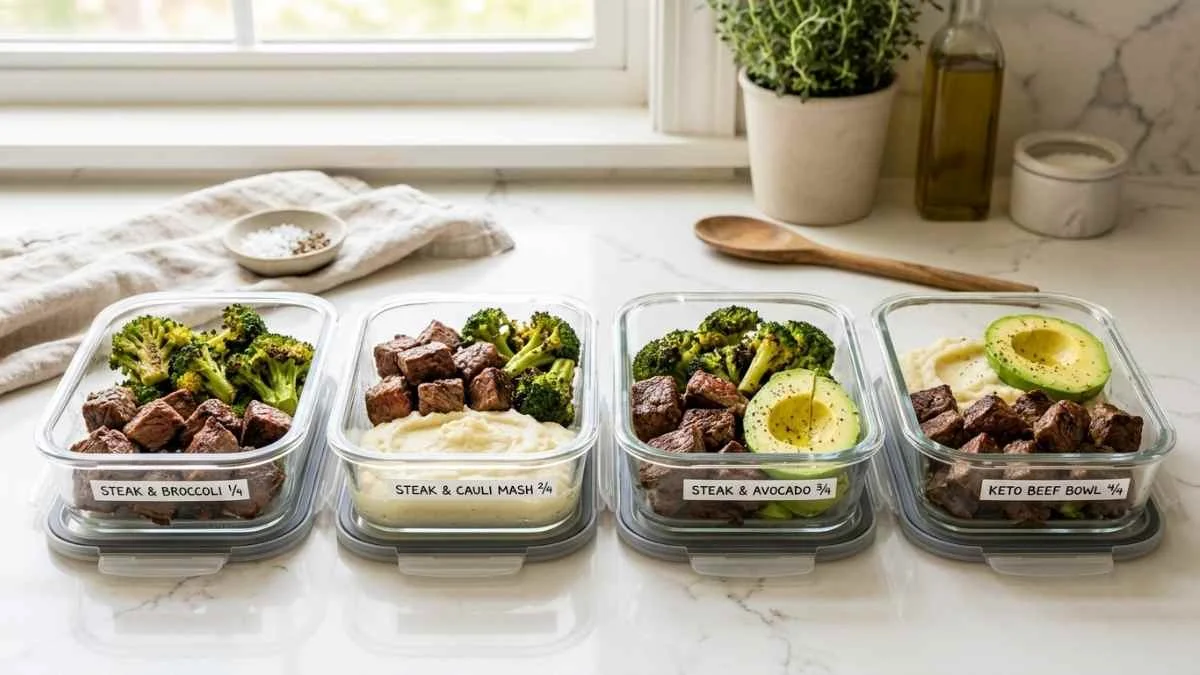
Keto Meal Prep: The 60-Minute Method
You do not need to cook every meal from scratch.
Once or twice per week:
Step 1: Cook Protein
Prepare several portions of:
- Chicken
- Beef
- Eggs
- Fish
Step 2: Prepare Vegetables
Wash and chop:
- Broccoli
- Cauliflower
- Cucumber
- Zucchini
- Lettuce
- Spinach
Step 3: Prepare Healthy Fats
Portion:
- Nuts
- Seeds
- Avocado
- Olive oil
Step 4: Build Containers
Create simple combinations:
Protein + vegetables + healthy fat
This makes following the plan much easier during busy days.
How Much Water Should You Drink?
Hydration is important on any weight-loss diet.
Instead of forcing a universal amount, use thirst, activity, climate, and urine color as practical guides.
People reducing carbohydrates may experience changes in water and sodium balance, particularly during the early phase of a ketogenic diet.
Drink regularly throughout the day and pay attention to symptoms such as dizziness, weakness, persistent headaches, or unusual fatigue.
If symptoms are significant or persistent, speak with a healthcare professional.
What Are Keto Flu Symptoms?
Some beginners report temporary symptoms after dramatically reducing carbohydrates.
These may include:
- Headache
- Fatigue
- Irritability
- Muscle cramps
- Dizziness
- Difficulty concentrating
These symptoms are sometimes referred to as “keto flu.”
They can be related to changes in fluid and electrolyte balance, dietary intake, and the transition to a lower-carbohydrate eating pattern.
A sudden, severe, or persistent symptom should not simply be blamed on “keto flu.” Seek medical advice when appropriate.
Should You Count Calories on Keto?
Not necessarily at first, but calories still matter for weight loss.
Some people naturally eat less when carbohydrates are reduced because meals become more filling and hunger decreases.
Others can easily overeat calorie-dense keto foods.
For example:
- Nuts are nutritious but calorie-dense.
- Cheese is nutritious but calorie-dense.
- Olive oil is healthy but calorie-dense.
- Butter is calorie-dense.
- Heavy cream is calorie-dense.
- Nut butter is calorie-dense.
Therefore, “low carb” does not mean “eat unlimited amounts.”
If weight loss has stalled for several weeks, reviewing portions and total calorie intake can be useful.
What Rate of Weight Loss Should You Expect?
Do not judge your entire diet based on the scale during the first few days.
Low-carbohydrate diets can cause an early reduction in body weight partly because glycogen and associated water decrease.
After that initial change, actual fat loss generally occurs more gradually.
The CDC notes that gradual weight loss of approximately 1–2 pounds per week is more likely to be maintained than very rapid weight loss.
Your individual result may be slower or faster.
A healthy weight-loss journey should be evaluated over several weeks rather than by daily scale fluctuations.
What If Your Weight Stops Decreasing?
A plateau does not necessarily mean keto has stopped working.
Check:
1. Portions
Are your portions gradually increasing?
2. Snacks
Are you eating nuts, cheese, or keto desserts frequently?
3. Drinks
Are calories coming from:
- Cream
- Sweetened coffee
- Smoothies
- Alcohol
- Juice
4. Activity
Has your daily movement decreased?
5. Sleep
Poor sleep can make weight management more difficult.
6. Consistency
Are weekdays keto but weekends very high in calories?
7. Medical Factors
Certain medications and medical conditions can influence weight management.
Keto Mistakes That Can Prevent Weight Loss
Mistake 1: Eating Unlimited Fat
Keto is high in fat, but fat is still calorie-dense.
Mistake 2: Too Little Protein
Protein should be a major part of your meals.
Mistake 3: Avoiding Vegetables
Non-starchy vegetables provide fiber and micronutrients.
Mistake 4: Eating Too Many Keto Desserts
A keto cookie can still contain substantial calories.
Mistake 5: Drinking Hidden Calories
Coffee creamers, sweetened drinks, smoothies, and alcohol can add calories quickly.
Mistake 6: Expecting Immediate Fat Loss
The first week can look different because of changes in body water.
Mistake 7: Making the Diet Too Complicated
You do not need 30 completely different recipes.
Simple meals are often easier to maintain.
Exercise With a Keto Diet
A weight-loss plan should not depend on diet alone.
Combine nutrition with regular physical activity.
A balanced routine can include:
- Walking
- Strength training
- Resistance exercises
- Cycling
- Swimming
- Mobility exercises
Strength training is particularly useful because maintaining muscle is an important consideration during weight loss.
Start at a level appropriate for your fitness and health status.
How to Track Your Progress
Do not use only the bathroom scale.
Track:
Body Weight
Measure under similar conditions, such as in the morning.
Waist Circumference
Measure consistently.
Progress Photos
Use similar lighting and clothing.
Clothing Fit
Notice how your clothes feel.
Energy
Record whether your energy is improving or declining.
Hunger
Ask:
Am I satisfied between meals?
Strength
Track your exercise performance.
A person’s weight can fluctuate from day to day, so weekly trends are usually more useful than individual measurements.
The 80/20 Approach to Long-Term Keto
For some people, extremely strict keto is difficult to maintain indefinitely.
Instead of thinking:
“I must be perfect.”
Think:
“I need a sustainable eating pattern.”
Your long-term approach might involve:
- Mostly whole foods
- Low added sugar
- Plenty of vegetables
- Adequate protein
- Controlled portions
- Healthy fats
- Lower carbohydrate intake
- Occasional flexibility
Some people may prefer strict keto, while others may do better with a moderate low-carbohydrate diet.
The best diet is one you can follow consistently while meeting your nutritional needs.
Evidence does not show that ketogenic diets are universally superior to other weight-loss diets, and long-term sustainability remains an important consideration.
Frequently Asked Questions
Can women lose weight on keto?
Yes. Women can lose weight with a ketogenic or lower-carbohydrate diet when it helps them maintain an appropriate calorie intake and meets their nutritional needs.
However, women have different nutritional requirements depending on age, activity, pregnancy, breastfeeding, menopause, medical conditions, and other factors.
How many carbs should I eat to lose weight?
A common ketogenic target is approximately 20–50 grams of carbohydrates per day, but the appropriate amount varies by individual.
Some people can lose weight successfully on a less restrictive low-carbohydrate diet.
Can I eat rice on keto?
Regular rice is relatively high in carbohydrates and generally does not fit into a strict ketogenic diet.
Cauliflower rice or other lower-carbohydrate vegetable alternatives can be used instead.
Can I eat potatoes on keto?
Potatoes are carbohydrate-rich and generally do not fit within a strict keto carbohydrate target.
Try cauliflower mash, mashed broccoli, or roasted low-carbohydrate vegetables instead.
Can I eat fruit on keto?
Some fruits are relatively high in carbohydrates. Small portions of berries are commonly included in ketogenic meal plans because they contain less carbohydrate than many other fruits.
Can I drink milk on keto?
Regular milk contains lactose, a naturally occurring sugar, so portions need to be considered.
Unsweetened lower-carbohydrate alternatives may fit more easily into a keto plan.
Can I have a cheat day?
A full high-carbohydrate cheat day can make it difficult to maintain nutritional ketosis.
Instead, focus on long-term consistency and flexible portions.
Do I need to exercise?
Exercise is not required for every pound of weight loss, but physical activity can support health, fitness, muscle maintenance, and long-term weight management.
Combining dietary changes with exercise can provide greater long-term benefits than dietary changes alone.
How long should I follow keto?
There is no universal answer.
Some people use keto temporarily, while others prefer a long-term lower-carbohydrate approach.
Because long-term safety and sustainability can vary between individuals, discuss prolonged strict ketogenic dieting with a qualified healthcare professional when appropriate.
Final 30-Day Keto Checklist
Before starting your month, prepare:
☐ Eggs
☐ Chicken
☐ Beef
☐ Fish
☐ Greek yogurt
☐ Cottage cheese
☐ Leafy greens
☐ Broccoli
☐ Cauliflower
☐ Zucchini
☐ Cucumber
☐ Mushrooms
☐ Avocados
☐ Olive oil
☐ Nuts
☐ Seeds
☐ Low-carb seasonings
☐ Water bottle
☐ Meal-prep containers
During the month:
☐ Eat protein at every main meal
☐ Include non-starchy vegetables
☐ Control calorie-dense fats
☐ Limit added sugar
☐ Drink water regularly
☐ Stay physically active
☐ Sleep adequately
☐ Track weekly progress
☐ Adjust portions when necessary
☐ Focus on consistency rather than perfection

Final Thoughts
A successful keto diet meal plan should not feel like punishment.
The purpose of this 30-day plan is to give you a simple structure that can be adapted to your lifestyle, food preferences, activity level, and weight-loss goals.
Start with simple meals.
Build your plate around protein and vegetables.
Use healthy fats in sensible portions.
Reduce added sugar and highly refined carbohydrates.
Track your progress over several weeks rather than judging yourself based on one day.
And most importantly, remember that weight loss is not determined by body type alone. Your individual nutritional needs are influenced by many factors, including age, body size, activity, health, medications, sleep, genetics, and lifestyle.
A keto diet can be one useful approach for some adults, but it is not the only successful approach. A sustainable, nutritionally adequate eating pattern that you can maintain over time is ultimately more important than following a perfect diet for a few weeks.
If you have a medical condition, take medication, are pregnant or breastfeeding, or have a history of disordered eating, get individualized guidance from your healthcare professional before starting a restrictive diet.
Start simple. Stay consistent. Make adjustments based on your results—and choose a plan that supports your health as well as your weight-loss goal.